
88 results
SEPT. 24, 2026 / AI
The MaxText team successfully reproduced Ai2’s Olmo 3 7B language model from scratch on Google Cloud TPUs using JAX/XLA, precisely matching the original PyTorch-on-GPU reference across pre-training and mid-training stages on all held-out evaluations. The implementation achieved up to 57.4% Model Flops Utilization (MFU) and demonstrated robust infrastructure portability by surviving mid-run cluster resizes and cross-generation TPU shifts without requiring recipe alterations. Crucially, the exercise proved the necessity of comprehensive held-out validation by catching a silent data-loader memorization bug that artificially depressed training loss and would have otherwise faked a performance win.

SEPT. 11, 2026 / AI
The "autofinetune" project introduces an autonomous research loop that fully automates LLM post-training workflows, including Supervised Fine-Tuning (SFT) and Reinforcement Learning via GRPO. By defining boundary conditions and evaluation metrics in a single Markdown specification, developers can deploy an AI agent to iteratively edit training scripts, launch experiments, and automatically commit verified hyperparameter optimizations to Git. Built on Google’s AI stack—including Tunix, Gemma, and Cloud TPUs—this framework eliminates manual tuning cycles, successfully demonstrating hands-off performance gains in both function calling and math reasoning models.

SEPT. 9, 2026 / AI
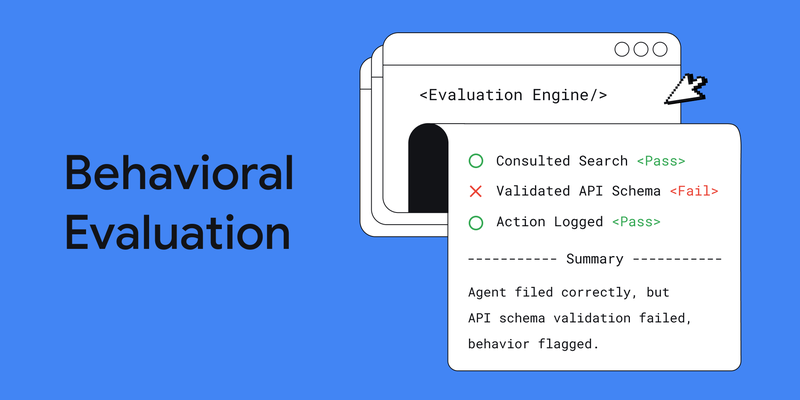
While end-to-end benchmarks like SWE-bench provide broad performance scores for AI agents, they are often expensive, slow, and lack the root-cause diagnostics needed to explain exactly where an agent's logic broke down. To solve this, developers should adopt behavioral evaluations—fast, local, unit-style tests that assert on discrete intermediate actions, such as verifying specific tool calls or file modifications rather than final string equality. By building these inexpensive micro-checks alongside macro benchmarks, engineering teams can confidently iterate on system prompts and upgrade models without the risk of regressions.
SEPT. 4, 2026 / AI
The Gemini Enterprise Developer Experience (DevEx) program conducts ongoing sprint testing of end-to-end developer workflows to identify and rapidly resolve friction points without relying on internal shortcuts. This recent sprint focused on optimizing enterprise AI governance, including refining setup prerequisites, securing extension configurations, and clarifying policy enforcement mechanics to ensure a smoother, more reliable deployment. Developers can now leverage updated documentation and standardized code samples to improve their experience with Agent Gateway and Semantic Governance configurations.

AUG. 24, 2026 / AI
Moving live voice agents from demo to production requires rigorous, automated testing to handle the unpredictability of real multi-turn conversations. ADK now provides native live evaluation, allowing developers to test graph-based agent workflows against LLM-driven simulated users that generate actual audio via Gemini TTS. By defining evaluation scenarios and natural-language rubrics, you can automatically score audio responses and tool executions, inspect the resulting transcripts in ADK Web, or run the CLI directly in your CI/CD pipeline.

AUG. 11, 2026 / Web
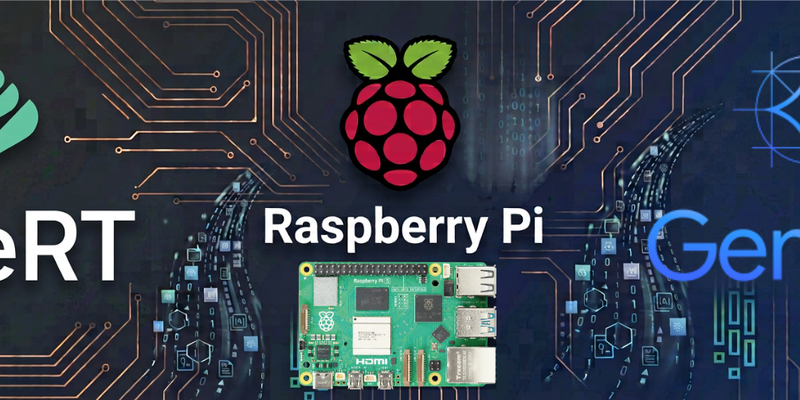
Deploying secure, real-time Edge AI on Raspberry Pi is now simplified using LiteRT and lightweight Gemma open models. LiteRT optimizes CPU and GPU performance, delivering fast token speeds for models like Gemma4, enabling real-time local reasoning for robotics. Developers can quickly convert, quantize, and run these models using the lightweight LiteRT CLI tool. Support for Hailo AI accelerators is also coming very soon.
AUG. 4, 2026 / AI
Google Cloud API Gateway now offers a model routing feature in Public Preview, allowing developers to dynamically route traffic to models like Gemini, Claude, or OpenAI OSS-GPT without hardcoding endpoints or managing open-source proxies. Developers can easily configure these routing rules directly within their OpenAPI 3.x specifications by mapping virtual model names to specific backend targets on a shared host. Once deployed, the Gateway acts as a serverless ingress layer that accepts standard OpenAI-compatible requests, automatically transcodes the payload to the native schema of the target model, and routes the traffic on the fly.

JULY 30, 2026 / AI
Google's open-source TPU microbenchmark suite provides developers with granular performance metrics across Network, Compute, HBM, Host Transfer, and Attention components to validate real-world hardware capabilities. By leveraging these benchmarks to establish a Roofline model, engineers can accurately diagnose whether their machine learning workloads are compute-, memory-, or network-bound. This empirical baseline directly guides targeted software optimizations—such as kernel tuning, mesh sharding, and rematerialization—to maximize hardware utilization for large-scale model deployments.

JULY 24, 2026 / AI
This second installment explores how Ray’s higher-level libraries—Serve, Data, and Train—abstract the complexities of running AI workloads on Google's TPU slices. Ray Serve uses a simple topology configuration to correctly gang-schedule large multi-host models, while Ray Data eliminates data-loading bottlenecks by feeding accelerators directly with native JAX batches. Finally, JaxTrainer streamlines distributed training across TPUs by automatically handling cross-slice coordination, checkpointing, and fault tolerance.
JULY 20, 2026 / AI
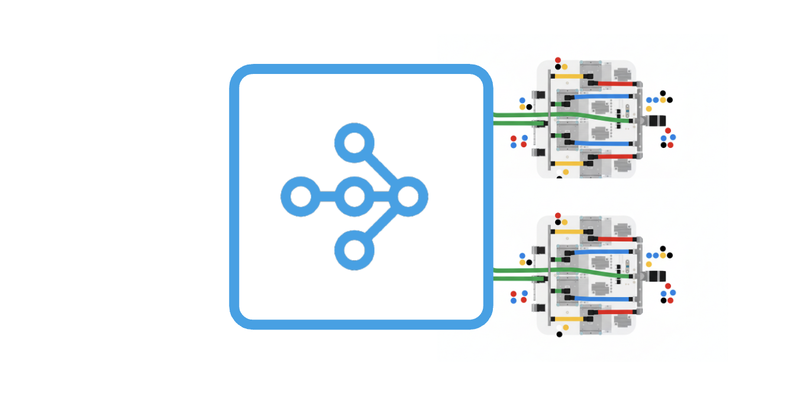
Ray 2.55 introduces official, first-class support for Google Cloud TPUs, enabling developers to run distributed Python workloads on Google's accelerators using the familiar Ray task-and-actor APIs. To handle the strict networking requirement of keeping multi-host TPU "slices" together over their Inter-Chip Interconnect (ICI), the KubeRay Operator on GKE automatically provisions and labels the underlying hardware layout. Ray Core utilizes these labels via its slice_placement_group() primitive to atomically reserve complete slices, allowing developers to deploy jobs through KubeRay, Ray Train, or Ray Serve simply by declaring a hardware topology (like "4x4") without writing custom placement code.