
36 results
SEPT. 30, 2026 / AI
To address the quadratic latency bottleneck of self-attention in high-resolution video diffusion models, developers implemented Sparse VideoGen (SVG) to dynamically route attention heads to highly structured spatial or temporal sparse masks. Translating this algorithmic sparsity into physical hardware speedups on TPUs required optimizing the Splash Attention kernel by bypassing empty memory tiles, restricting exact coordinate masking strictly to boundary tiles, and permuting token memory layouts into temporal-major order for contiguous access. By aligning these sparse masks with actual hardware tile execution, the combined optimizations significantly reduced wasted matrix operations and achieved up to a 1.69x end-to-end inference speedup for 1440p video generation.

JULY 31, 2026 / AI
Agent Platform's evaluation service is now generally available, providing developers with a unified engine to measure agent quality consistently across local development experiments and live production traffic. You can evaluate agents using over 20 pre-built metrics, DeepMind-backed adaptive rubrics, or custom code-based and LLM-as-a-judge metrics stored in a centralized, versioned registry. The service integrates directly into existing workflows via the Agent Platform SDK, agents-cli, and ADK, offering built-in user and environment simulators to automate complex multi-turn testing and streamline CI pipelines.

JULY 31, 2026 / AI
To prevent context window bloat and reduce token consumption, Genkit Go introduces Agent Skills based on a progressive disclosure architecture. Developers can package specialized instructions, scripts, and references into modular SKILL.md bundles where only the frontmatter metadata is initially exposed to the agent's system prompt. When a task matches the skill's description, Genkit's middleware dynamically loads the full instruction body and associated assets, ensuring the model accesses precise workflows exactly when needed.

JULY 21, 2026 / AI
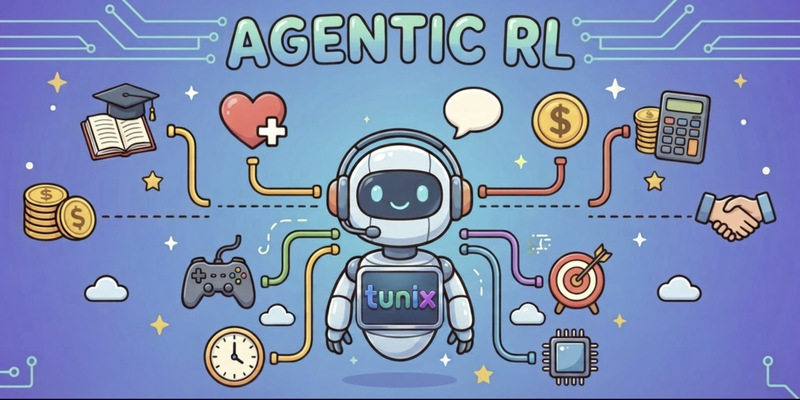
Tunix is Google’s new JAX-native post-training library designed to eliminate TPU idling bottlenecks when training multi-turn, tool-using LLM reasoning agents. It maximizes hardware throughput by combining highly concurrent, asynchronous rollouts with a decoupled producer-consumer pipeline, ensuring the trainer is constantly fed even while agents wait on network I/O or environment steps. Additionally, Tunix provides plug-and-play abstractions and continuous macro-level profiling, allowing developers to easily integrate custom open-source environments and optimize complex distributed workflows without massive code rewrites.
JULY 6, 2026 / AI
Distributed AI training is notoriously fragile because losing a single machine typically crashes the entire multi-node job, forcing a time-consuming, full-workload infrastructure restart. To address this, Google’s JAX ecosystem utilizes elastic training via Pathways, which converts a hardware failure into a catchable Python exception so the running process can survive. When an unplanned failure occurs, the system automatically replaces only the broken worker, restores the last viable checkpoint from Cloud Storage, and resumes training in place—minimizing total downtime to under two minutes without ever restarting the main controller process.

JULY 1, 2026 / AI
The Google Cloud Workbench Notebooks extension for VS Code has officially launched, allowing developers to connect their local IDE to scalable, cloud-based Jupyter environments. This integration streamlines the machine learning lifecycle by eliminating context switching and providing direct access to high-performance Google Cloud infrastructure. To support transparency and community-driven innovation, the newly released extension is fully open-sourced and available on GitHub and the VS Code Marketplace.

JUNE 17, 2026 / Web
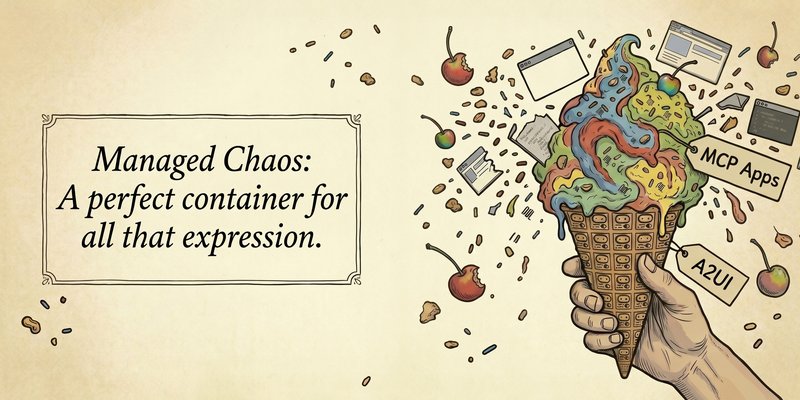
This post introduces three architectural patterns designed to integrate Model Context Protocol (MCP) Apps and Agent-to-User Interface (A2UI) to solve the tradeoff between highly custom iframe environments and native, declarative rendering. By combining these approaches, developers can serve native-feeling UIs directly over MCP servers, embed complex and stateful iframe apps securely inside declarative views, or inject generative UI components into legacy systems. Ultimately, these hybrid frameworks empower engineering teams to deliver secure, performant, and brand-consistent agentic user experiences tailored to their specific project constraints.
MAY 26, 2026 / Google Pay
We are excited to bring Express checkout with Google Pay for Android native apps enabling developers...

MAY 4, 2026 / AI
Researchers at UCSD have successfully implemented DFlash, a block-diffusion speculative decoding method, on Google TPUs to bypass the sequential bottlenecks of traditional autoregressive drafting. By "painting" entire blocks of candidate tokens in a single forward pass rather than predicting them one-by-one, the system achieved average speedups of 3.13x, with peak performance nearly doubling that of existing methods like EAGLE-3. This open-source integration into the vLLM ecosystem optimizes TPU hardware by leveraging "free" parallel verification and high-quality draft predictions for complex reasoning tasks.

APRIL 15, 2026 / Pay
Google has introduced enhancements to the Google Pay API to provide developers with greater flexibility and control over merchant-initiated transactions (MIT). The update includes new objects within the PaymentDataRequest to specifically handle recurring subscriptions, deferred payments like hotel bookings, and automatic account reloads. By allowing merchants to clearly define future payment terms, these changes improve transparency for users and help reduce transaction declines through better token management. Developers can now implement these features to create more seamless and secure long-term payment experiences.
