

At Google I/O, we explored how Google Pay is evolving for the era of agentic commerce. We shared a variety of powerful new capabilities for the Google Pay developer platform, designed to facilitate commerce, streamline your checkout funnel, and deliver exceptional user experiences.
Read on for a summary of what we covered during the event, focusing on the latest tools designed to help you optimize your checkout experiences and reach your business goals or check out the recording of our session on YouTube:
Link to Youtube Video (visible only when JS is disabled)
Preparing for Agentic Commerce
We know the value of the work you’ve already put into your payment stack. To help you transition into the era of AI-powered shopping, your existing Google Pay backend and current Merchant ID are now fully compatible with the new Universal Commerce Protocol (UCP). This means you can power new, agentic commerce experiences using the same Google Pay infrastructure and payment service provider (PSP) relationships you use today, extending your reach without rebuilding your core payment logic. To further superpower your AI agents, we also unveiled the Google Pay & Wallet Developer MCP server. It integrates directly into your preferred development environment, enabling your AI agents to help manage integrations, troubleshoot errors, analyze trends, and generate code. Available today in Public Preview, the MCP server simplifies integration workflows to accelerate your time to the first transaction, and it will graduate to general availability later this year.
Get started at: goo.gle/pay-wallet-mcp

Streamlining the Android Checkout Experience
We are committed to removing friction from the buyer's journey, which is why we are bringing the power of the onPaymentAuthorized and onPaymentDataChanged callbacks to Android, achieving parity with our web platform. With these dynamic callbacks, you can move the Google Pay button upstream—such as directly on Product Detail or Cart pages—to offer a true 1-click Express checkout experience. As users interact with the payment sheet, you can dynamically present shipping options and total prices (including taxes) based on their address. Furthermore, you can authorize transactions, handle retries, and deliver instant feedback without closing the payment sheet, helping you improve authorization rates and conversions.
Get started at: goo.gle/pay-android-dpu
Expanding Reach to Social Apps
Following our introduction of Google Pay support for Android WebViews last year, we are advancing our capabilities by extending support to social apps. With a single integration, you can now enable seamless payment experiences across native Android apps, the mobile web, desktop environments, and major social platforms.
WebView integration guide: goo.gle/pay-webview
Optimizing Checkout Experience
Managing processing costs is a top priority for growing businesses. We are introducing new tools to give you more transparency and control over transaction routing:
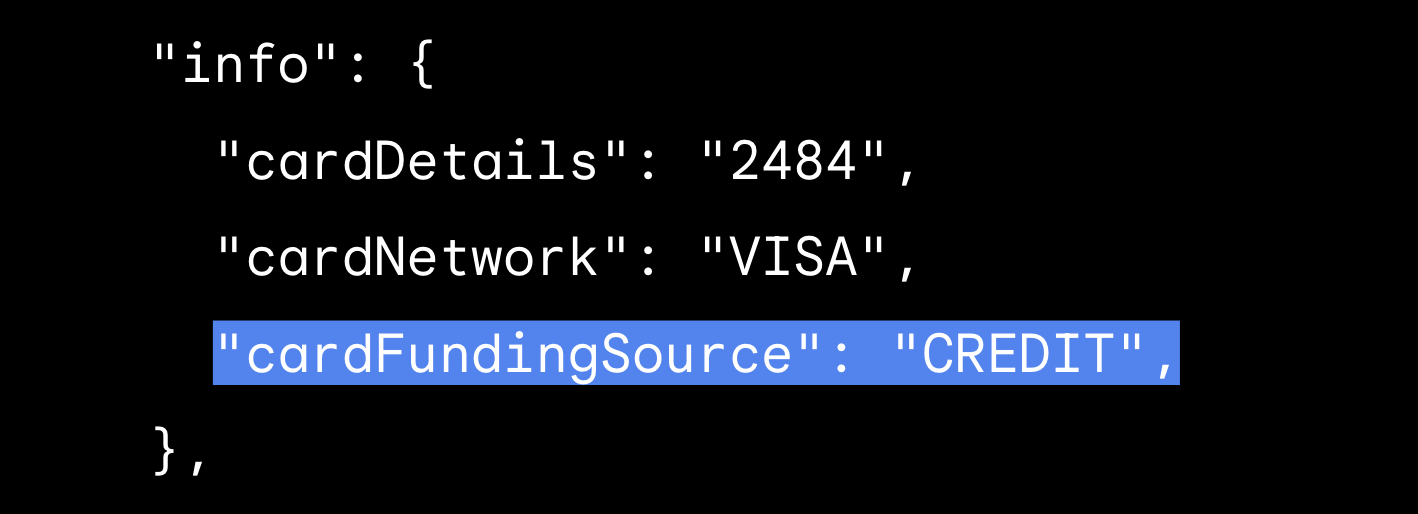
Seamless Continuity for Recurring Billing
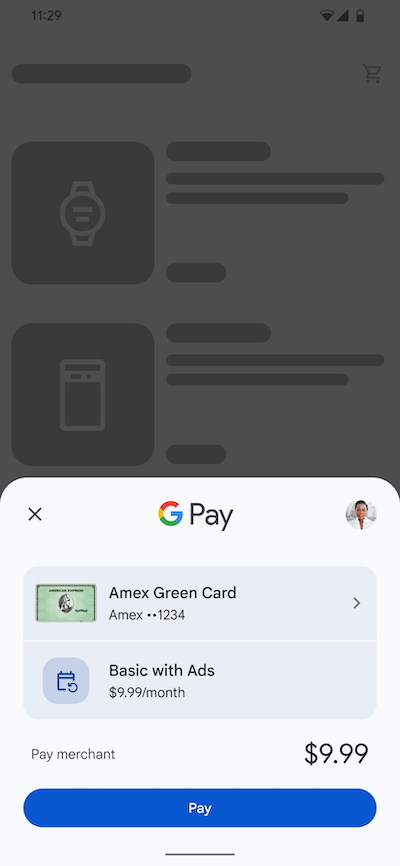
To better support Merchant-Initiated Transactions (MITs), you or your PSP can now receive lifecycle notifications for Google Pay payment tokens when underlying credentials change. These notifications include the updated state of the token, enabling you to proactively contact customers to update their payment methods before the next billing cycle and ensuring continuity for recurring transactions.
Get started at: goo.gle/pay-mit-lcm
Cross-Device Authentication
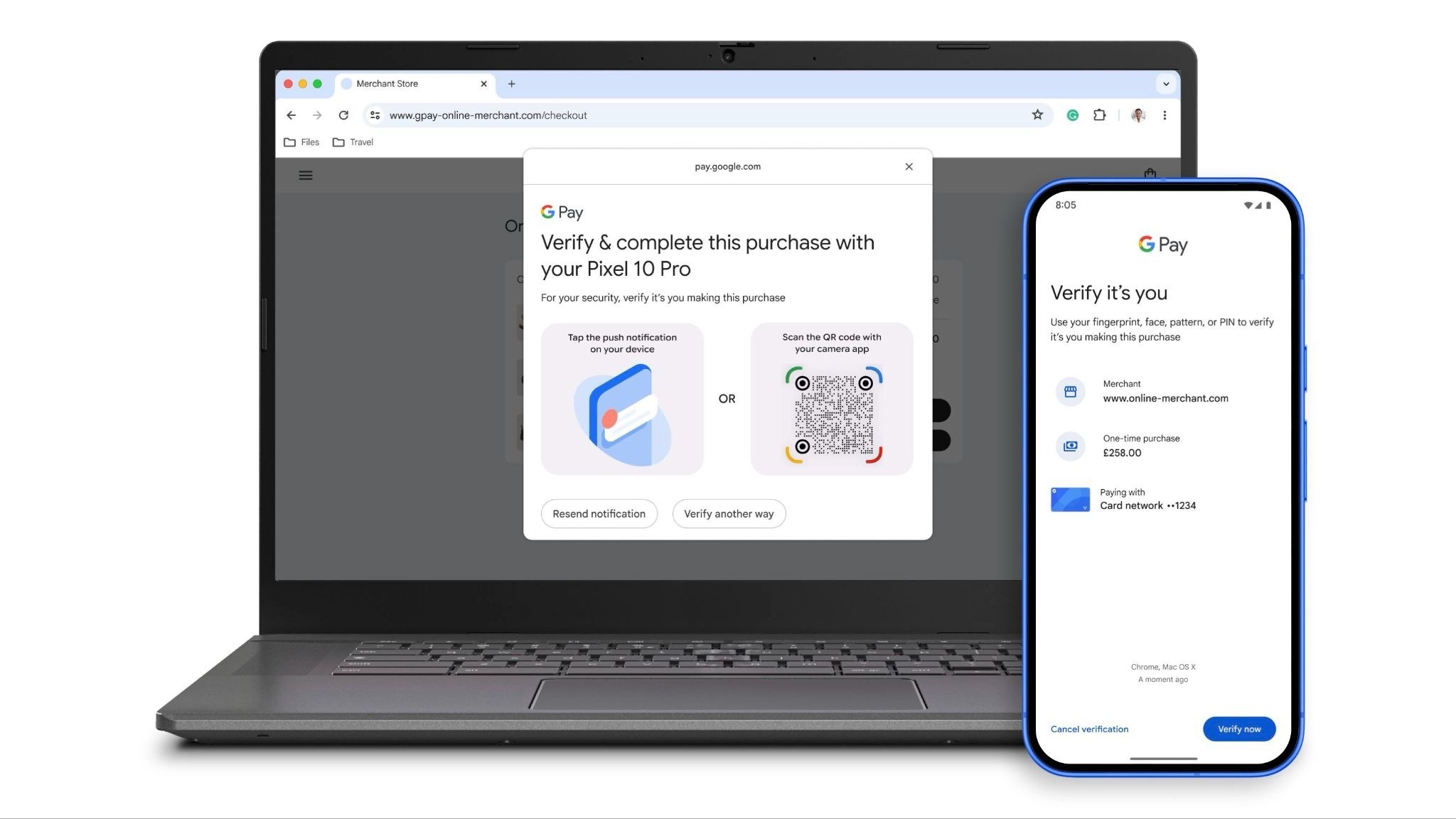
Desktop remains a critical surface where friction—particularly from Multi-Factor Authentication (MFA) mandates—can lead to cart abandonment. To help solve this, we are introducing Cross-Device Authentication, a capability that moves high-friction desktop checkouts into a secure, mobile-first authentication flow.
For qualifying transactions on your desktop site, users are prompted to authenticate on their phone via a secure notification or QR code. Customers can then approve the payment using a familiar biometric unlock or PIN on their trusted Android device, as a simpler alternative to SMS OTPs or clunky redirects. This provides built-in MFA compliance support, helps increase conversion rates, and uses Google Pay's secure, tokenized credentials to support your ability to achieve fraud liability shifts.
Get started with Google Pay
It's been a highly productive year, and we look forward to seeing what you build next. Take a look at our developer documentation and get started with your Google Pay integration today to set up your platform for future agentic experiences
Follow @GooglePayDevs on X for future updates.
Explore this announcement and all Google I/O 2026 updates on io.google.
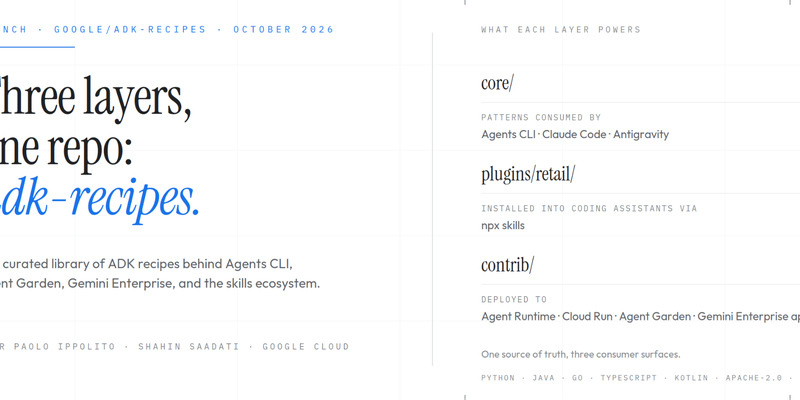
Three layers, one repo: a tour of google/adk-recipes

Enhancing Android Checkout with Dynamic Callbacks in Google Pay

Supercharge your integration workflow with the Google Pay & Wallet Developer MCP server

Announcing DPoP Support for Google OAuth: Securing Refresh Tokens

ML Drift: Next-Gen GPU AI/ML Inference at the Edge