
85 results
SEPT. 24, 2026 / AI
The MaxText team successfully reproduced Ai2’s Olmo 3 7B language model from scratch on Google Cloud TPUs using JAX/XLA, precisely matching the original PyTorch-on-GPU reference across pre-training and mid-training stages on all held-out evaluations. The implementation achieved up to 57.4% Model Flops Utilization (MFU) and demonstrated robust infrastructure portability by surviving mid-run cluster resizes and cross-generation TPU shifts without requiring recipe alterations. Crucially, the exercise proved the necessity of comprehensive held-out validation by catching a silent data-loader memorization bug that artificially depressed training loss and would have otherwise faked a performance win.

SEPT. 15, 2026 / AI
This blog post explores how to transition AI agents from static, build-time security controls to dynamic runtime governance using the Gemini Enterprise Agent Platform. It highlights three primary managed defenses: Model Armor for screening edge prompts, Semantic Governance Policies for evaluating tool intent against business rules, and Agent Anomaly Detection for catching multi-turn exploits. By shifting these capabilities to the platform level, security administrators can dynamically enforce policies and neutralize complex attacks without needing to modify or redeploy the agent's underlying code.

AUG. 26, 2026 / AI
Google Cloud has natively integrated TPU support into the vLLM serving engine, allowing developers to elastically scale high-demand embedding pipelines using Google Kubernetes Engine (GKE). To handle massive 15K+ token contexts for models like Qwen3-Embedding-8B, the engineering team implemented TPU-specific optimizations such as hardware-safe tensor alignment, JAX/XLA compilation pre-warming, and a hybrid StepPool architecture for chunked prefill management. These enhancements achieve near-perfect numerical parity with reference GPU baselines, and developers can immediately leverage the open-sourced setup recipes on the AI-Hypercomputer GitHub to build their own high-throughput semantic retrieval applications.

AUG. 17, 2026 / AI
Building autonomous AI agents that mutate production state requires moving beyond soft system prompts to a robust zero-trust architecture. To secure Google Agent Development Kit (ADK) workflows against prompt injections and malicious execution, developers must implement hardware-backed cryptographic signatures for database writes, kernel-level sandboxing with gVisor for dynamic code, and deterministic semantic gateways for I/O validation. By enforcing these hard security boundaries at the infrastructure level, you can safely deploy multi-tool AI agents without risking unauthorized data manipulation or server compromise.

AUG. 11, 2026 / AI
As AI coding assistants shift the developer's primary role from writing boilerplate to reviewing and maintaining systems, language choice becomes critical for long-term architectural integrity. Go directly addresses this new paradigm by utilizing its strict compiler, integrated toolchain, and uncompromising readability to provide deterministic guardrails that help AI models self-correct and generate highly standardized code. By enforcing ecosystem-wide consistency and strict backward compatibility, the Go platform empowers engineering teams to efficiently verify, optimize, and maintain high-velocity, AI-generated output in production environments.

JULY 21, 2026 / AI
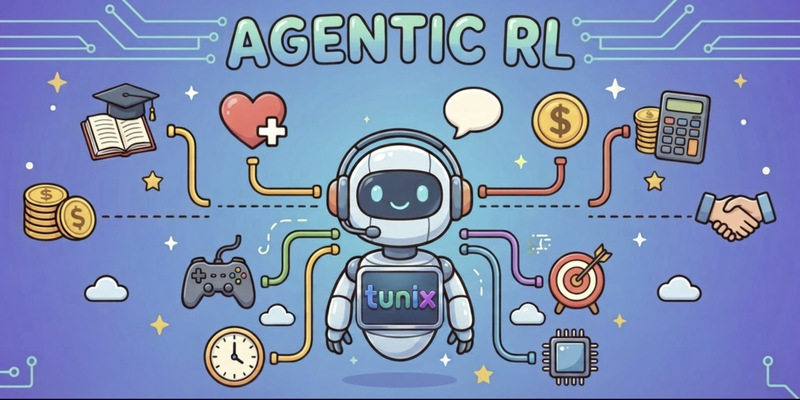
Tunix is Google’s new JAX-native post-training library designed to eliminate TPU idling bottlenecks when training multi-turn, tool-using LLM reasoning agents. It maximizes hardware throughput by combining highly concurrent, asynchronous rollouts with a decoupled producer-consumer pipeline, ensuring the trainer is constantly fed even while agents wait on network I/O or environment steps. Additionally, Tunix provides plug-and-play abstractions and continuous macro-level profiling, allowing developers to easily integrate custom open-source environments and optimize complex distributed workflows without massive code rewrites.
JULY 16, 2026 / AI
To resolve the scaling bottlenecks and runtime errors caused by monolithic system prompts, engineering teams should treat prompts as build artifacts by modularizing instructions into reusable templates. By running these modular "skill files" through a transpiler, developers can enforce static validation, catch missing dependencies at build time, and integrate prompt generation directly into their CI/CD pipelines. This deterministic approach prevents code drift and ultimately establishes a safe framework where agents can propose updates to their own logic via standard pull requests.

JULY 9, 2026 / Web
We're excited to introduce LiteRT.js, the newest member of the LiteRT family! LiteRT.js is our powerful solution for running machine learning models directly in the browser, extending Google's cross-platform edge AI runtime to the web. Built for JavaScript developers, LiteRT.js delivers state-of-the-art ML model inference performance on WebGPU and upcoming WebNN, with a fallback to WebAssembly for CPU. This post provides a quick tour of LiteRT.js and gives web developers everything they need to get started.

JULY 8, 2026 / Mobile
On May 23, 2026, fresh off the stage at Google I/O, our Google Developer Experts (GDEs) converged on...

JULY 6, 2026 / AI
Distributed AI training is notoriously fragile because losing a single machine typically crashes the entire multi-node job, forcing a time-consuming, full-workload infrastructure restart. To address this, Google’s JAX ecosystem utilizes elastic training via Pathways, which converts a hardware failure into a catchable Python exception so the running process can survive. When an unplanned failure occurs, the system automatically replaces only the broken worker, restores the last viable checkpoint from Cloud Storage, and resumes training in place—minimizing total downtime to under two minutes without ever restarting the main controller process.
