
191 results
APRIL 15, 2026 / AI
Gemini CLI has introduced subagents, specialized expert agents that handle complex or high-volume tasks in isolated context windows to keep the primary session fast and focused. These agents can be customized via Markdown files, run in parallel to boost productivity, and are easily invoked using the @agent syntax for targeted delegation. This architecture prevents "context rot" by consolidating intricate multi-step executions into concise summaries for the main orchestrator.

APRIL 14, 2026 / AI
The Google Cloud AI Agent Bake-Off highlights a shift from simple prompt engineering to rigorous agentic engineering, emphasizing that production-ready AI requires a modular, multi-agent architecture. The post outlines five key developer tips, including decomposing complex tasks into specialized sub-agents and using deterministic code for execution to prevent probabilistic errors. Furthermore, it advises developers to prioritize multimodality and open-source protocols like MCP to ensure agents are scalable, integrated, and future-proof against rapidly evolving model capabilities.

APRIL 7, 2026 / AI
TorchTPU is a new engineering stack designed to provide a native, high-performance experience for running PyTorch workloads on Google’s TPU infrastructure with minimal code changes. It features an "Eager First" approach with multiple execution modes and utilizes the XLA compiler to optimize distributed training across massive clusters. Moving into 2026, the project aims to further reduce compilation overhead and expand support for dynamic shapes and custom kernels to ensure seamless scalability for the next generation of AI.

APRIL 1, 2026 / AI
The Agent Development Kit (ADK) SkillToolset introduces a "progressive disclosure" architecture that allows AI agents to load domain expertise on demand, reducing token usage by up to 90% compared to traditional monolithic prompts. Through four distinct patterns—ranging from simple inline checklists to "skill factories" where agents write their own code—the system enables agents to dynamically expand their capabilities at runtime using the universal agentskills.io specification. This modular approach ensures that complex instructions and external resources are only accessed when relevant, creating a scalable and self-extending framework for modern AI development.

MARCH 30, 2026 / AI
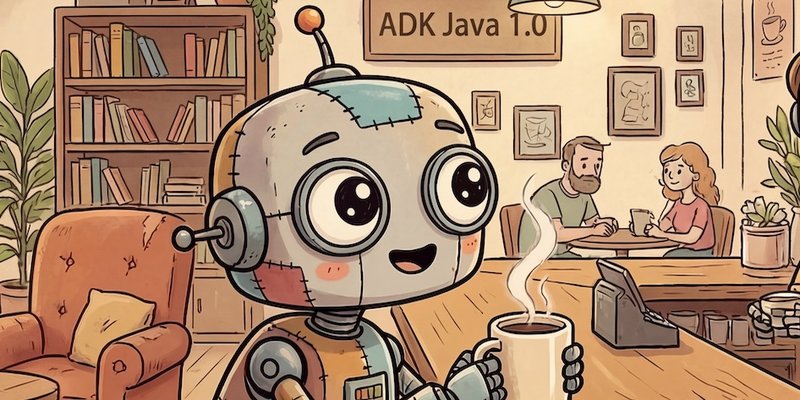
Google has released version 1.0.0 of the Agent Development Kit (ADK) for Java, introducing powerful new features like Google Maps grounding, built-in URL fetching, and a standardized Agent2Agent protocol for cross-framework collaboration. The update enhances agent control through a new "App" and "Plugin" architecture, which allows for global logging, automated context window management via event compaction, and "Human-in-the-Loop" workflows for action confirmations. Additionally, the release provides robust session and memory services using Google Cloud integrations like Firestore and Vertex AI to manage long-term state and large data artifacts.
MARCH 25, 2026 / AI
To bridge the gap between static model knowledge and rapidly evolving software practices, Google DeepMind developed a "Gemini API developer skill" that provides agents with live documentation and SDK guidance. Evaluation results show a massive performance boost, with the gemini-3.1-pro-preview model jumping from a 28.2% to a 96.6% success rate when equipped with the skill. This lightweight approach demonstrates how giving models strong reasoning capabilities and access to a "source of truth" can effectively eliminate outdated coding patterns.
MARCH 23, 2026 / AI
This blog post introduces a workflow for extracting high-quality data from complex, unstructured documents by combining LlamaParse with Gemini 3.1 models. It demonstrates an event-driven architecture that uses Gemini 3.1 Pro for agentic parsing of dense financial tables and Gemini 3.1 Flash for cost-effective summarization. By following the provided tutorial, developers can build a personal finance assistant capable of transforming messy brokerage statements into structured, human-readable insights.
MARCH 18, 2026 / AI
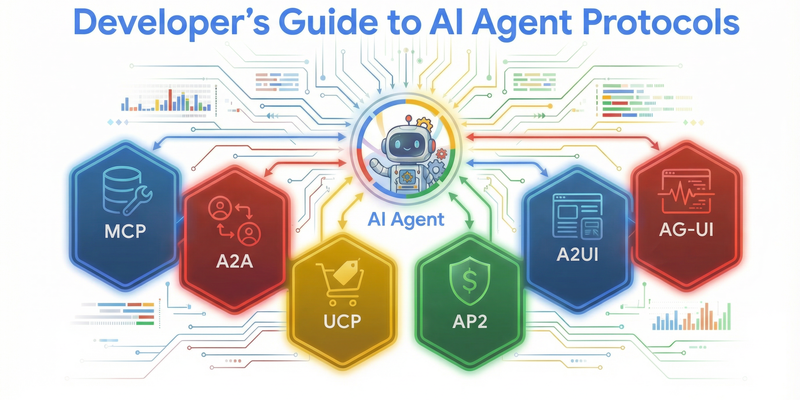
This blog post introduces a suite of six protocols, such as MCP and A2A, designed to eliminate custom integration code by standardizing how AI agents access data and communicate. Using a "kitchen manager" agent as a practical example, it demonstrates how these tools handle complex tasks like real-time inventory checks, wholesale commerce via UCP, and secure payment authorization through AP2. By leveraging the Agent Development Kit (ADK), developers can also implement A2UI and AG-UI to deliver interactive dashboards and seamless streaming interfaces to users.
MARCH 10, 2026 / AI
Google has introduced Finish Changes and Outlines for Gemini Code Assist in IntelliJ and VS Code to reduce developer friction and eliminate the need for long, manual prompting. Finish Changes acts as an AI pair programmer that completes code, implements pseudocode, and applies refactoring patterns by observing your current edits and context. Meanwhile, Outlines improves code comprehension by generating interactive, high-level English summaries interleaved directly within the source code to help engineers navigate and understand complex files.
MARCH 10, 2026 / AI
The Gemini Code Assist team has introduced a suite of updates focused on streamlining the core coding workflow through high-velocity tools like Agent Mode with Auto Approve and Inline Diff Views. These enhancements, along with new features for precise context management and custom commands, aim to transform the AI from a general assistant into a highly tailored, seamless collaborator that adapts to your specific development style.
