54 results
AUG. 13, 2026 / Mobile
Credentio is a newly released, open-source C++ library from Google that allows developers to integrate high-performance, local-first validation of C2PA Content Credentials into their client and server applications. By processing assets entirely locally with a highly optimized memory footprint, the library delivers instant validation verdicts for multi-gigabyte media files without incurring cloud latency, bandwidth costs, or data privacy risks. The library currently features deep manifest parsing alongside configurable trust list integration, and is available now on Google Source with future plans to support full credential generation and embedding.

AUG. 11, 2026 / AI
As AI coding assistants shift the developer's primary role from writing boilerplate to reviewing and maintaining systems, language choice becomes critical for long-term architectural integrity. Go directly addresses this new paradigm by utilizing its strict compiler, integrated toolchain, and uncompromising readability to provide deterministic guardrails that help AI models self-correct and generate highly standardized code. By enforcing ecosystem-wide consistency and strict backward compatibility, the Go platform empowers engineering teams to efficiently verify, optimize, and maintain high-velocity, AI-generated output in production environments.

AUG. 4, 2026 / AI
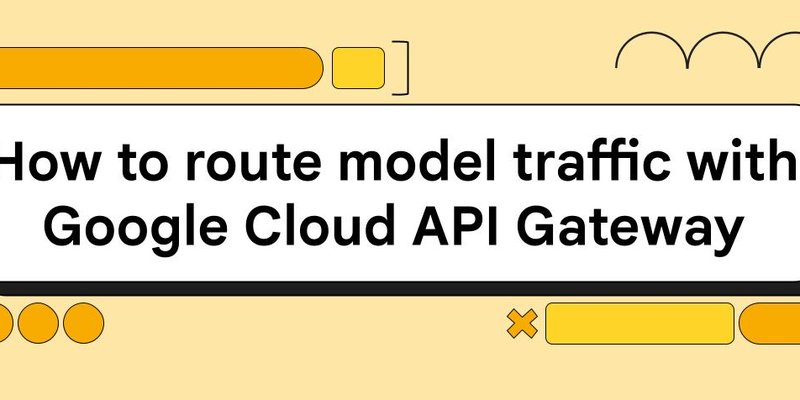
Google Cloud API Gateway now offers a model routing feature in Public Preview, allowing developers to dynamically route traffic to models like Gemini, Claude, or OpenAI OSS-GPT without hardcoding endpoints or managing open-source proxies. Developers can easily configure these routing rules directly within their OpenAPI 3.x specifications by mapping virtual model names to specific backend targets on a shared host. Once deployed, the Gateway acts as a serverless ingress layer that accepts standard OpenAI-compatible requests, automatically transcodes the payload to the native schema of the target model, and routes the traffic on the fly.
AUG. 3, 2026 / AI
Real-time AI agents break traditional request-response load balancing paradigms because they rely on long-lived, stateful bidirectional streams that obscure true server capacity. To solve this, developers must implement application-level session tracking directly within the runtime to accurately measure the committed concurrent workload of active conversations. By feeding these precise session counts alongside standard CPU utilization metrics into a hybrid routing algorithm, infrastructure can effectively distribute stateful AI traffic and prevent individual backend bottlenecks.

JULY 21, 2026 / AI
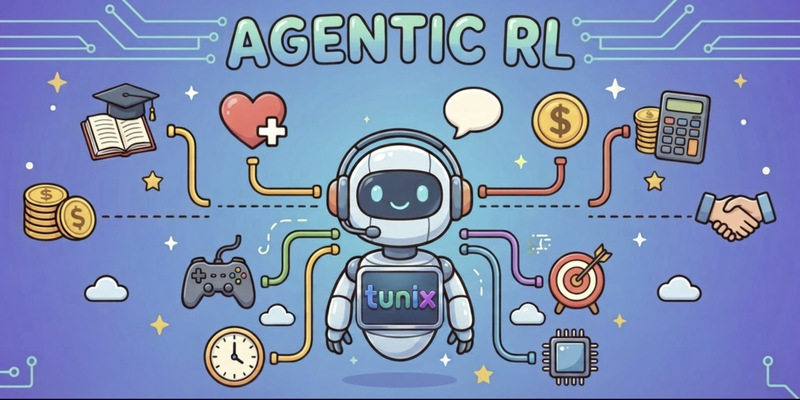
Tunix is Google’s new JAX-native post-training library designed to eliminate TPU idling bottlenecks when training multi-turn, tool-using LLM reasoning agents. It maximizes hardware throughput by combining highly concurrent, asynchronous rollouts with a decoupled producer-consumer pipeline, ensuring the trainer is constantly fed even while agents wait on network I/O or environment steps. Additionally, Tunix provides plug-and-play abstractions and continuous macro-level profiling, allowing developers to easily integrate custom open-source environments and optimize complex distributed workflows without massive code rewrites.
JULY 16, 2026 / AI
Google Cloud has partnered with Parallel Web Systems to natively integrate Parallel's search infrastructure as a web grounding provider on the Gemini Enterprise Agent Platform. This integration enables developers to anchor their AI agents in verifiable, real-time web results, significantly improving factual accuracy for complex enterprise workflows. Additionally, the partnership offers expanded architectural flexibility, allowing users to programmatically extract, permanently cache, and process web data alongside other large language models.

JULY 16, 2026 / AI
To resolve the scaling bottlenecks and runtime errors caused by monolithic system prompts, engineering teams should treat prompts as build artifacts by modularizing instructions into reusable templates. By running these modular "skill files" through a transpiler, developers can enforce static validation, catch missing dependencies at build time, and integrate prompt generation directly into their CI/CD pipelines. This deterministic approach prevents code drift and ultimately establishes a safe framework where agents can propose updates to their own logic via standard pull requests.
JULY 16, 2026 / AI
Conductor has evolved from a Gemini CLI extension into a portable plugin, bringing conversational Spec-Driven Development (SDD) to ecosystems like Antigravity CLI and Claude. Rather than relying on strict command sequences, developers can now chat naturally with their AI assistant while it dynamically manages persistent markdown artifacts (like spec.md and plan.md) in the background. This update eliminates workflow friction while ensuring your repository remains a version-controlled, single source of truth for your project's architecture and state across different AI tools.
JUNE 30, 2026 / AI
Building AI agents often leaves developers uncertain if prompt tweaks to fix single errors will accidentally cause widespread regressions in production. To bridge this gap, Google has introduced a new developer skill for coding agents that automates a five-stage evaluation flywheel: preparing data, running inference, grading with adaptive AutoRaters, analyzing failure clusters, and executing targeted optimizations. Running continuously against production traffic or on-demand via synthetic scenarios, this tool allows developers to describe testing goals in plain language while an independent evaluation service safely validates and counts actual performance improvements.

JUNE 17, 2026 / Web
This post introduces three architectural patterns designed to integrate Model Context Protocol (MCP) Apps and Agent-to-User Interface (A2UI) to solve the tradeoff between highly custom iframe environments and native, declarative rendering. By combining these approaches, developers can serve native-feeling UIs directly over MCP servers, embed complex and stateful iframe apps securely inside declarative views, or inject generative UI components into legacy systems. Ultimately, these hybrid frameworks empower engineering teams to deliver secure, performant, and brand-consistent agentic user experiences tailored to their specific project constraints.