
70 results
JUNE 22, 2026 / AI
How a Python agent and a Go agent collaborate on contract compliance using the Agent2Agent protocolY...

JUNE 17, 2026 / Web
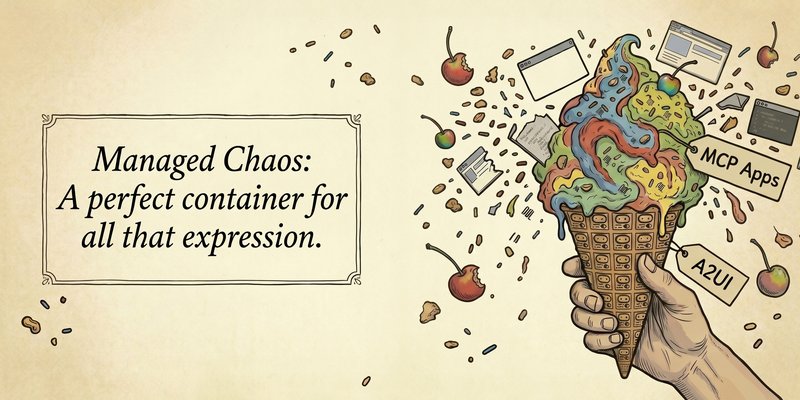
This post introduces three architectural patterns designed to integrate Model Context Protocol (MCP) Apps and Agent-to-User Interface (A2UI) to solve the tradeoff between highly custom iframe environments and native, declarative rendering. By combining these approaches, developers can serve native-feeling UIs directly over MCP servers, embed complex and stateful iframe apps securely inside declarative views, or inject generative UI components into legacy systems. Ultimately, these hybrid frameworks empower engineering teams to deliver secure, performant, and brand-consistent agentic user experiences tailored to their specific project constraints.
JUNE 16, 2026 / Mobile
Google is enhancing Sign in with Google by introducing new OIDC standard claims—specifically auth_time and amr (Authentication Methods Reference) to provide developers with deeper session metadata. These updates allow verified apps to verify the "freshness" of a user's login and the specific authentication methods used (such as MFA or hardware keys), enabling more dynamic, risk-based access controls. By leveraging these federated identity signals, platforms can better prevent account takeover and fraud while implementing granular security policies like step-up authentication for sensitive actions.

MAY 26, 2026 / Google Pay
We are excited to bring Express checkout with Google Pay for Android native apps enabling developers...

MAY 14, 2026 / Mobile
Integration of Arm Scalable Matrix Extension 2 (SME2) and the Google AI Edge software stack enables high-performance, on-device generative AI by turning the CPU into a powerful matrix-compute accelerator. Using Stability AI’s "stable-audio-open-small" model as a case study, it outlines a streamlined "Convert, Optimize, and Deploy" pipeline that utilizes LiteRT, XNNPACK, and KleidiAI to automate hardware acceleration. The resulting implementation achieves over a 2x speedup in audio generation and a 4x reduction in memory usage while maintaining high audio quality on Arm-powered mobile devices and laptops.

MAY 12, 2026 / AI
How to transition from stateless chatbots to production-grade agents capable of managing long-running enterprise workflows, such as HR onboarding, that span days or weeks. It introduces the Agent Development Kit (ADK) and its architectural shifts, specifically using durable state machines and persistent session storage to ensure an agent never loses context during "idle time" or server restarts. By leveraging event-driven webhooks and multi-agent delegation, the tutorial demonstrates how to build resilient systems that "sleep" during pauses and wake up to resume complex tasks with high reasoning accuracy.

APRIL 21, 2026 / AI
The blog post outlines the transition of a brittle sales research prototype into a robust production agent using Google’s Agent Development Kit (ADK). By replacing monolithic scripts with orchestrated sub-agents and structured Pydantic outputs, the developers eliminated silent failures and fragile parsing. Additionally, the post highlights the necessity of dynamic RAG pipelines and OpenTelemetry observability to ensure AI agents are scalable, cost-effective, and transparent in real-world applications.

APRIL 15, 2026 / Pay
Google has introduced enhancements to the Google Pay API to provide developers with greater flexibility and control over merchant-initiated transactions (MIT). The update includes new objects within the PaymentDataRequest to specifically handle recurring subscriptions, deferred payments like hotel bookings, and automatic account reloads. By allowing merchants to clearly define future payment terms, these changes improve transparency for users and help reduce transaction declines through better token management. Developers can now implement these features to create more seamless and secure long-term payment experiences.

APRIL 14, 2026 / AI
The Google Cloud AI Agent Bake-Off highlights a shift from simple prompt engineering to rigorous agentic engineering, emphasizing that production-ready AI requires a modular, multi-agent architecture. The post outlines five key developer tips, including decomposing complex tasks into specialized sub-agents and using deterministic code for execution to prevent probabilistic errors. Furthermore, it advises developers to prioritize multimodality and open-source protocols like MCP to ensure agents are scalable, integrated, and future-proof against rapidly evolving model capabilities.

APRIL 1, 2026 / AI
The Agent Development Kit (ADK) SkillToolset introduces a "progressive disclosure" architecture that allows AI agents to load domain expertise on demand, reducing token usage by up to 90% compared to traditional monolithic prompts. Through four distinct patterns—ranging from simple inline checklists to "skill factories" where agents write their own code—the system enables agents to dynamically expand their capabilities at runtime using the universal agentskills.io specification. This modular approach ensures that complex instructions and external resources are only accessed when relevant, creating a scalable and self-extending framework for modern AI development.
