
93 results
OCT. 8, 2026 / Mobile
Google AI Edge has introduced ML Drift, a high-performance, universal GPU compute framework designed to accelerate on-device AI and machine learning inference. By abstracting the complexities of hardware and low-level APIs—including OpenGL ES, OpenCL, Metal, and WebGPU—ML Drift enables developers to build real-time, interactive ML experiences, from sophisticated video effects to generative AI, across mobile and desktop platforms.

OCT. 6, 2026 / AI
EmbeddingGemma 2 is a compact, open-source multimodal embedding model that maps text, code, images, video, and audio into a unified 768-dimensional space. Developers can use the sentence-transformers library to selectively load modular modality encoders—ranging from 270M to 740M parameters—to optimize memory usage. Additionally, Matryoshka Representation Learning enables dynamic dimension truncation down to 128d, significantly reducing vector database storage requirements while maintaining high retrieval performance.
OCT. 6, 2026 / Mobile
EmbeddingGemma 2 is a new 740M open-weight multimodal model that maps text, images, video, and audio into a unified vector space for privacy-first, on-device retrieval. Developers can easily integrate these capabilities cross-platform using MediaPipe Tasks or optimize fine-grained performance across CPU, GPU, and NPU accelerators with LiteRT. The model enables ultra-low-latency local solutions like search-as-you-type media retrieval, keyframe video moments finding, and zero-shot intent routing.

SEPT. 23, 2026 / AI
The Google Antigravity SDK now empowers developers to execute offline, agentic workflows locally using models like Gemma 4 26B A4B via LiteRT. This update facilitates powerful hybrid orchestration architectures, allowing a cloud model to act as a lightweight planner while local models securely handle token-intensive tasks—like code auditing and patching—directly on-device. Furthermore, the SDK provides drop-in support for OpenAI-compatible inference servers like Ollama and vLLM, enabling the seamless creation of privacy-first, autonomous local utilities.
SEPT. 11, 2026 / AI
The "autofinetune" project introduces an autonomous research loop that fully automates LLM post-training workflows, including Supervised Fine-Tuning (SFT) and Reinforcement Learning via GRPO. By defining boundary conditions and evaluation metrics in a single Markdown specification, developers can deploy an AI agent to iteratively edit training scripts, launch experiments, and automatically commit verified hyperparameter optimizations to Git. Built on Google’s AI stack—including Tunix, Gemma, and Cloud TPUs—this framework eliminates manual tuning cycles, successfully demonstrating hands-off performance gains in both function calling and math reasoning models.

AUG. 11, 2026 / Web
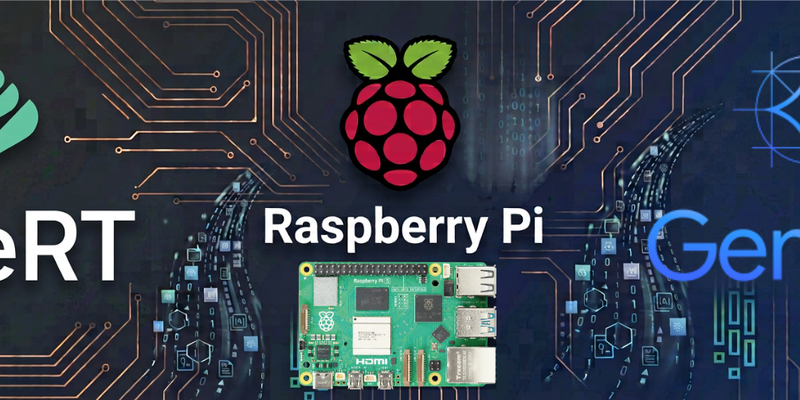
Deploying secure, real-time Edge AI on Raspberry Pi is now simplified using LiteRT and lightweight Gemma open models. LiteRT optimizes CPU and GPU performance, delivering fast token speeds for models like Gemma4, enabling real-time local reasoning for robotics. Developers can quickly convert, quantize, and run these models using the lightweight LiteRT CLI tool. Support for Hailo AI accelerators is also coming very soon.
JULY 21, 2026 / AI
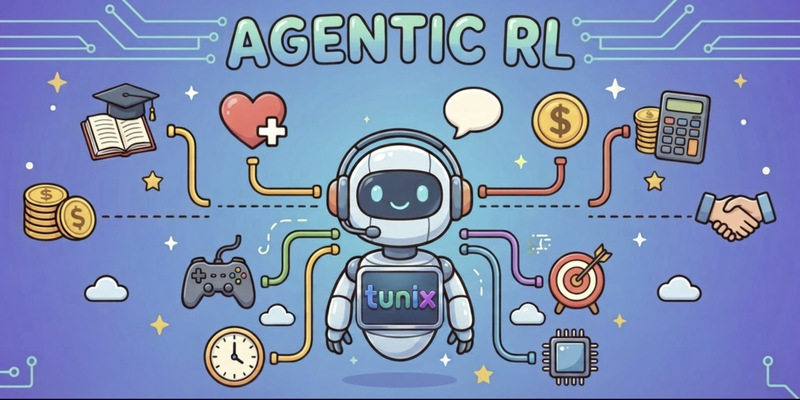
Tunix is Google’s new JAX-native post-training library designed to eliminate TPU idling bottlenecks when training multi-turn, tool-using LLM reasoning agents. It maximizes hardware throughput by combining highly concurrent, asynchronous rollouts with a decoupled producer-consumer pipeline, ensuring the trainer is constantly fed even while agents wait on network I/O or environment steps. Additionally, Tunix provides plug-and-play abstractions and continuous macro-level profiling, allowing developers to easily integrate custom open-source environments and optimize complex distributed workflows without massive code rewrites.
JULY 8, 2026 / Mobile
On May 23, 2026, fresh off the stage at Google I/O, our Google Developer Experts (GDEs) converged on...

JUNE 10, 2026 / AI
DiffusionGemma is an experimental text-generation model built on the Gemma 4 architecture that uses diffusion-based parallel generation instead of token-by-token autoregression, enabling much faster inference, bidirectional context awareness, and real-time self-correction while remaining deployable on consumer GPUs. Its architecture generates and refines 256-token blocks in parallel through iterative denoising, allowing it to handle complex constraint-based tasks such as Sudoku more effectively than traditional language models and demonstrating strong gains from fine-tuning. The model integrates with vLLM and other popular inference frameworks, giving developers access to a new non-autoregressive approach that combines high performance, efficient long-context scaling, and straightforward customization and deployment.
JUNE 5, 2026 / AI
Google has announced the Google Colab Command-Line Interface (CLI), a new tool that allows developers and AI agents to connect local terminals to remote Colab runtimes for frictionless execution. The lightweight CLI enables users to easily request high-powered GPUs, run local Python scripts remotely, and seamlessly retrieve artifact logs or models like fine-tuned Gemma 3 adapters. By integrating directly into standard terminal environments, the tool is highly programmable and ready to be used by AI agents such as Antigravity or Claude Code to manage complex machine learning pipelines.
