19 results
OCT. 20, 2026 / AI
TorchTPU integrates a native torch.device("tpu") backend directly into PyTorch, allowing developers to train large-scale models on Google Cloud TPUs without rewriting code in JAX. The TorchTitan TPU fork enhances this with production-grade scaling primitives like SimpleFSDP, Graph Trainer, and custom Pallas kernels that achieve high Model Flops Utilization (MFU) across dense and MoE architectures. Developers can leverage these battle-tested optimization playbooks, recipes, and the Hugging Face modeling backend to efficiently scale their own workloads on TPU infrastructure.

OCT. 20, 2026 / AI
This post announces native PyTorch backends for vLLM and SGLang powered by TorchTPU, enabling developers to run and optimize serving workloads using familiar PyTorch tools. Built in collaboration with open-source project maintainers, these engines include optimized TPU kernel implementations, production-ready features like KV cache management with TPU Sync, and disaggregated serving. Public benchmarks demonstrate state-of-the-art performance and industry-leading cost efficiency on Ironwood TPU across long-context and agentic workloads.

JUNE 30, 2026 / AI
The Agent Development Kit (ADK) for Go 2.0 has been released, introducing a first-class, graph-based workflow engine to help developers compose complex, multi-agent applications. This update adds built-in primitives for human-in-the-loop (HITL) orchestration, dynamic execution using plain Go code, and automated resilience features like exponential backoff retries. By unifying the execution model, both single-agent applications and intricate graphs now run on the same runtime, simplifying telemetry and state persistence.

NOV. 13, 2025 / AI
Metrax is a high-performance JAX-based metrics library developed by Google. It standardizes model evaluation by offering robust, efficient metrics for classification, NLP, and vision, eliminating manual re-implementation after migrating from TensorFlow. Key strengths include parallel computation of "at K" metrics (e.g., PrecisionAtK) for multiple K values and strong integration with the JAX AI Stack, leveraging JAX's performance features. It is open-source on GitHub.
OCT. 15, 2025 / AI
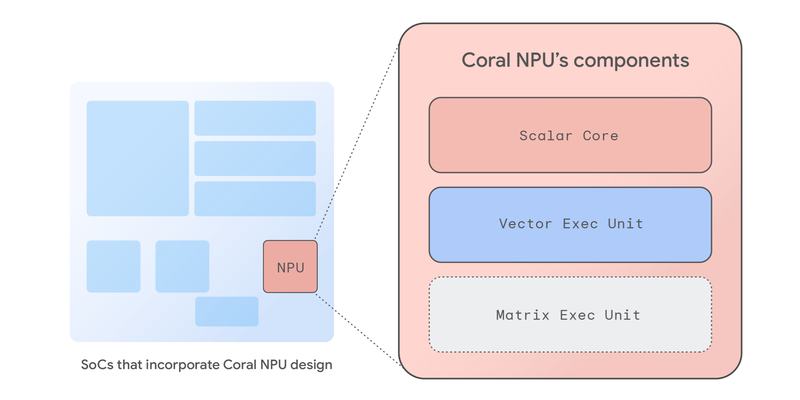
Coral NPU is a full-stack platform for Edge AI, addressing performance, fragmentation, and user trust deficits. It's an AI-first architecture, prioritizing ML matrix engines, and offers a unified developer experience. Designed for ultra-low-power, always-on AI in wearables and IoT, it enables contextual awareness, audio/image processing, and user interaction with hardware-enforced privacy. Synaptics is the first partner to implement Coral NPU.
OCT. 15, 2025 / AI
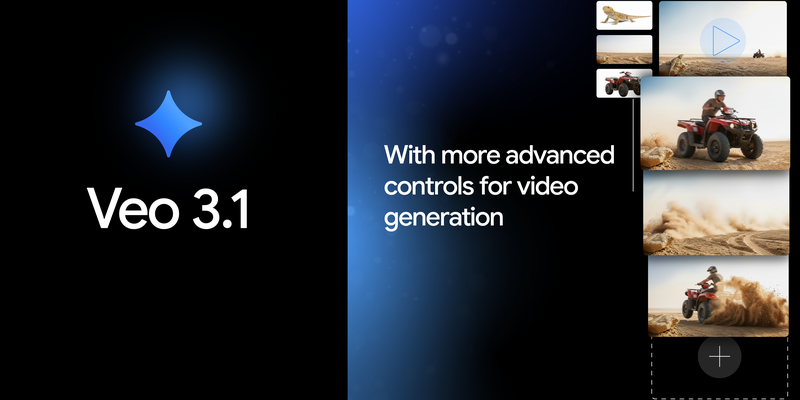
Google is releasing Veo 3.1 and Veo 3.1 Fast, an updated video generation model, in paid preview via the Gemini API. This version offers richer native audio, greater narrative control, and enhanced image-to-video capabilities. New features include guiding generation with reference images, extending existing Veo videos, and generating transitions between frames. Companies like Promise Studios, Latitude, and Whering are already using Veo 3.1 for various applications.
SEPT. 29, 2025 / AI
EmbeddingGemma, built from Gemma 3, transforms text into numerical embeddings for tasks like search and retrieval. It learns through Noise-Contrastive Estimation, Global Orthogonal Regularizer, and Geometric Embedding Distillation. Matryoshka Representation Learning allows flexible embedding dimensions. The development recipe includes encoder-decoder training, pre-fine-tuning, fine-tuning, model souping, and quantization-aware training.
MAY 7, 2025 / Gemini
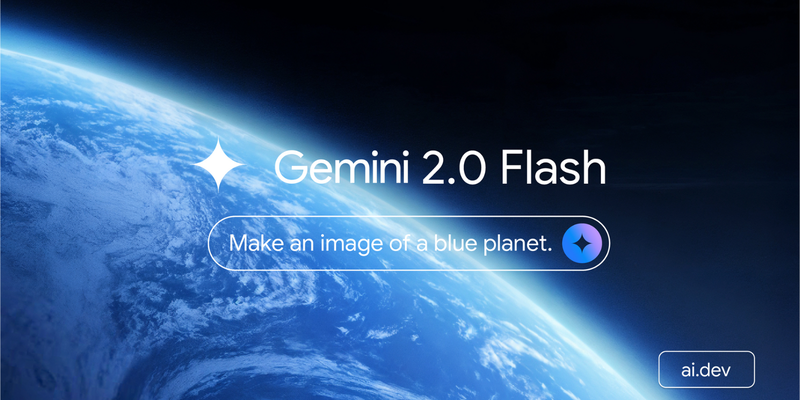
Gemini 2.0 Flash's image generation capabilities, now available in preview in Google AI Studio and Vertex AI, feature higher rate limits, enhanced visual quality, more precise text rendering, and more, allowing developers to create applications for product recontextualization, collaborative image editing, and dynamic SKU generation.
APRIL 30, 2025 / Gemma
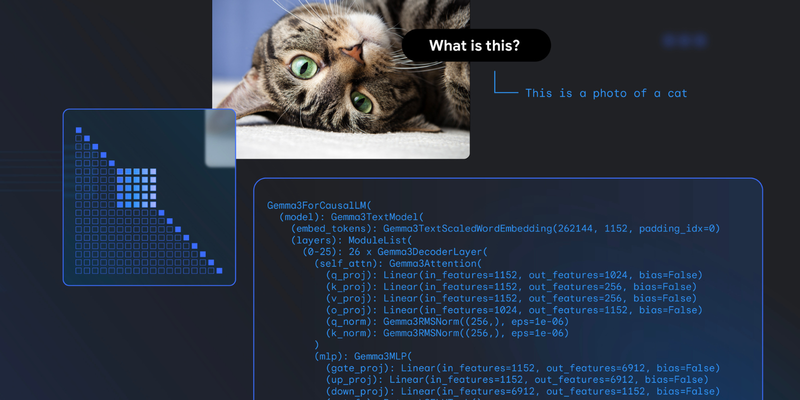
Gemma 3's new features include vision-language capabilities and architectural changes for improved memory efficiency and longer context handling compared to previous Gemma models.
APRIL 28, 2025 / Mobile
Updates to the Google Auth Platform include changes to OAuth configuration, client secrets display, and automatic deletion of unused clients, making the platform more secure and easier to use.