
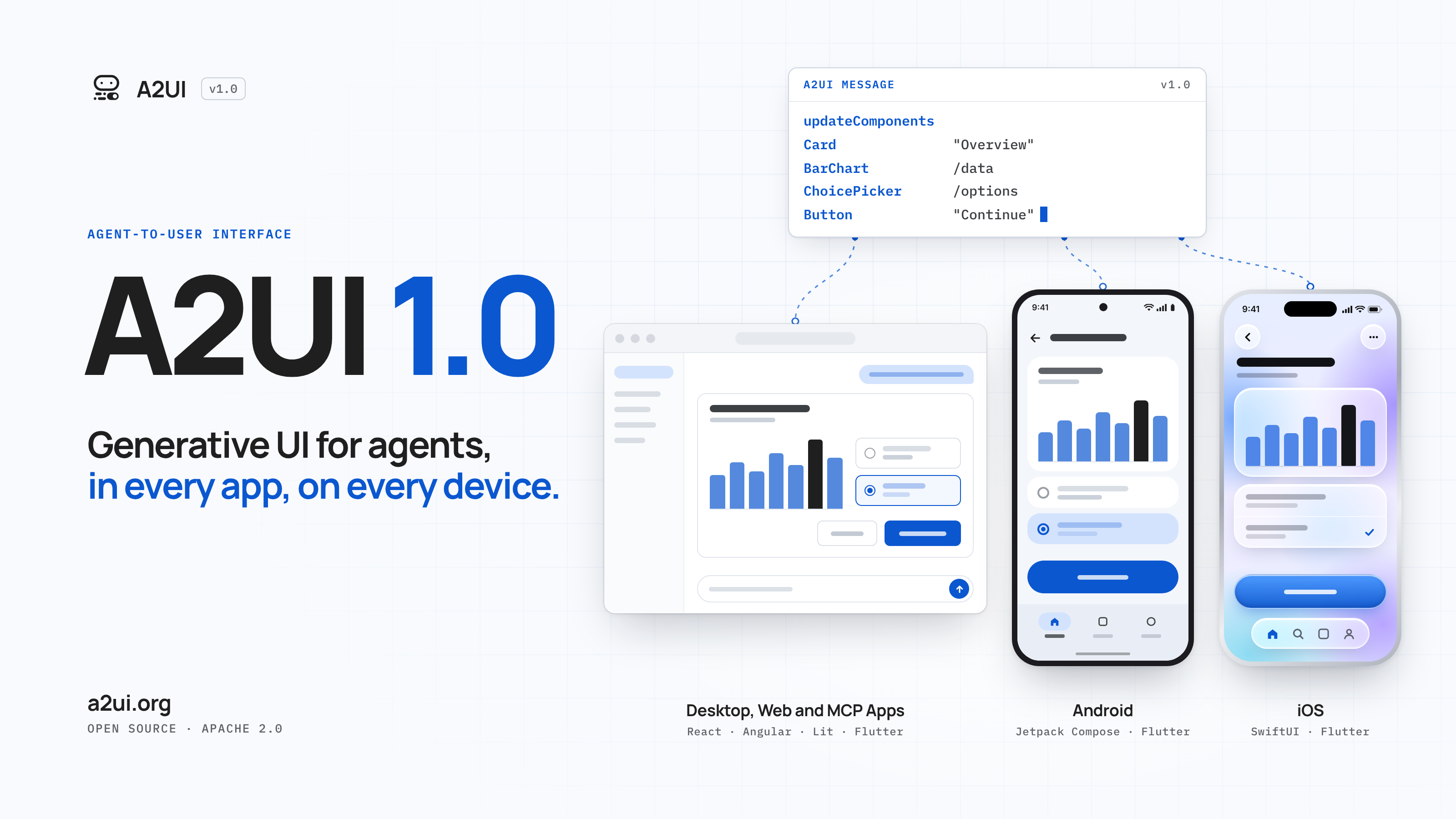
User interactions with agents today are where computers were in the terminal era: capable, and answering almost everything in text. Users can ask an agent for anything by typing or talking, and what comes back is usually a wall of text, a poor way to compare three products or edit and approve a detailed plan.
Today, we're releasing A2UI 1.0, the first stable version of our open protocol for generative UI. It lets AI agents answer with interactive screens, such as a form to confirm or a chart. Developers can use it now with open-source renderer SDKs for the web, Android, and iOS and agent SDKs for Python, TypeScript, and Dart. Companies such as Atlassian, Alation, Bloomberg, and ByteDance are already building with it.
With A2UI, the agent describes what to show, and every app draws the UI with its own native components. The application receives A2UI messages and each app renders the content securely and at native speed. Users get the same low latency, high trust, and complete native fidelity whether they reach a company's agent in its own app or in a third-party AI assistant that hosts MCP apps, such as Gemini or Claude.
You wake up sick. Getting through the morning takes six apps: book a video visit, move your meetings, tell your team, turn on an out-of-office reply, ask your partner to do school pickup and order soup. Ask a text-only agent instead, and you get a numbered wall of text, then round after round of “which ones?”. A2UI won't handle your sick day, but it gives developers the framework to build an agent that can. That agent could answer with one view of all six apps. Changing your plan is a couple of taps instead of another round of messages, and nothing is sent until you confirm.
The same agent output works on any screen. Ask an agent to “move dinner with Priya to Friday”, and it can answer with one view that lines up your calendar, open tables from a restaurant booking app and prices from a rideshare app, so the time that works for everyone is obvious. The developer builds that view once with A2UI, and it renders natively on your phone and on your laptop.
In both examples, A2UI is the framework that simplifies building these experiences across platforms. Developers build the agent and choose the platforms it works with. A2UI gives them the protocol the agent uses to describe each view, a way to combine components from different apps in one view, and renderers that draw it natively on the web, Android, and iOS.
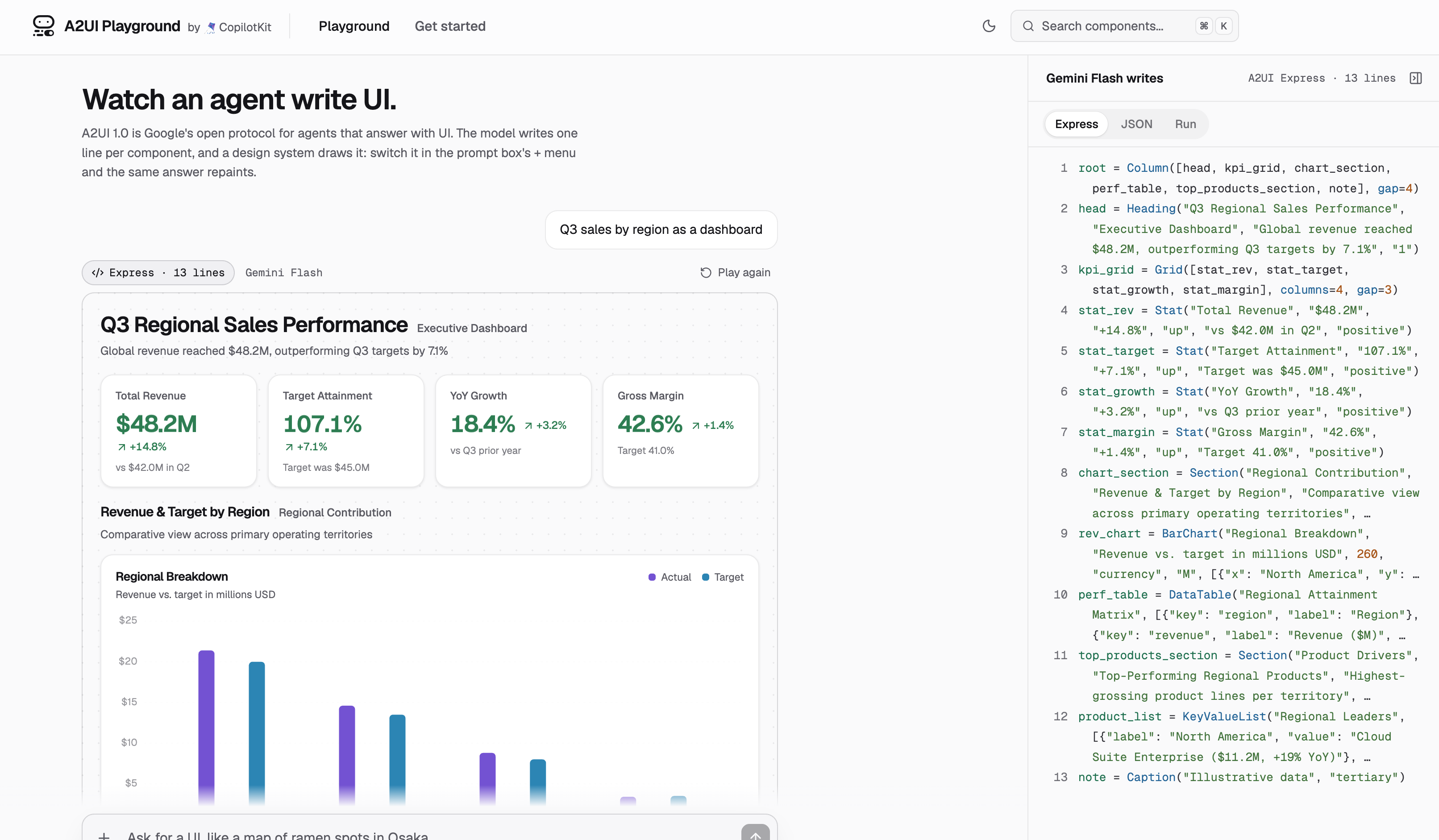
New to A2UI? Start with the A2UI Playground by CopilotKit or check out industry examples.
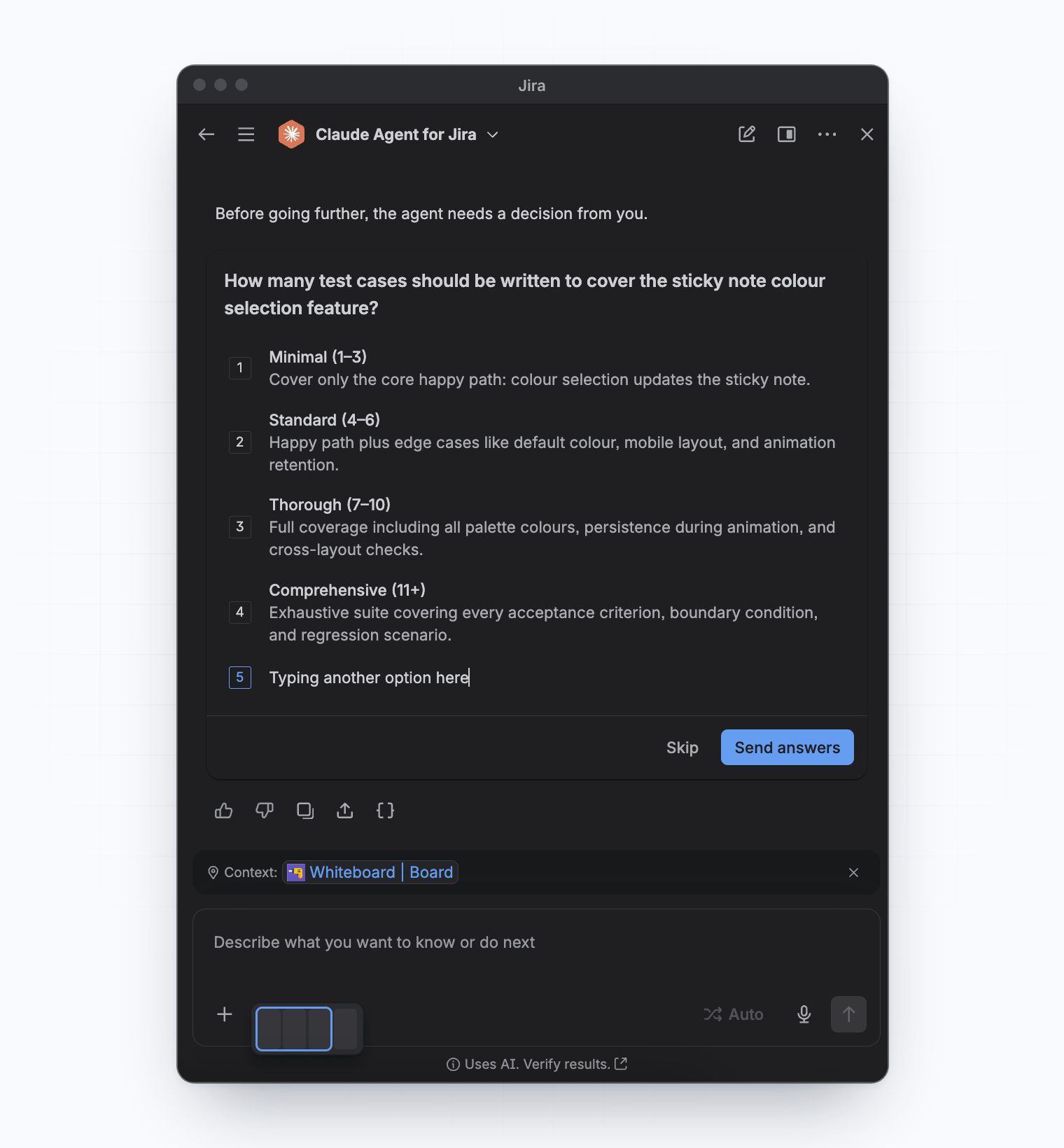
Atlassian is bringing A2UI to Jira, where teams can assign work items to AI agents. When an agent needs a follow-up from the team to finish a work item, such as a missing detail or a decision, it asks with an interactive card in the work item, and the team answers right there in Jira.
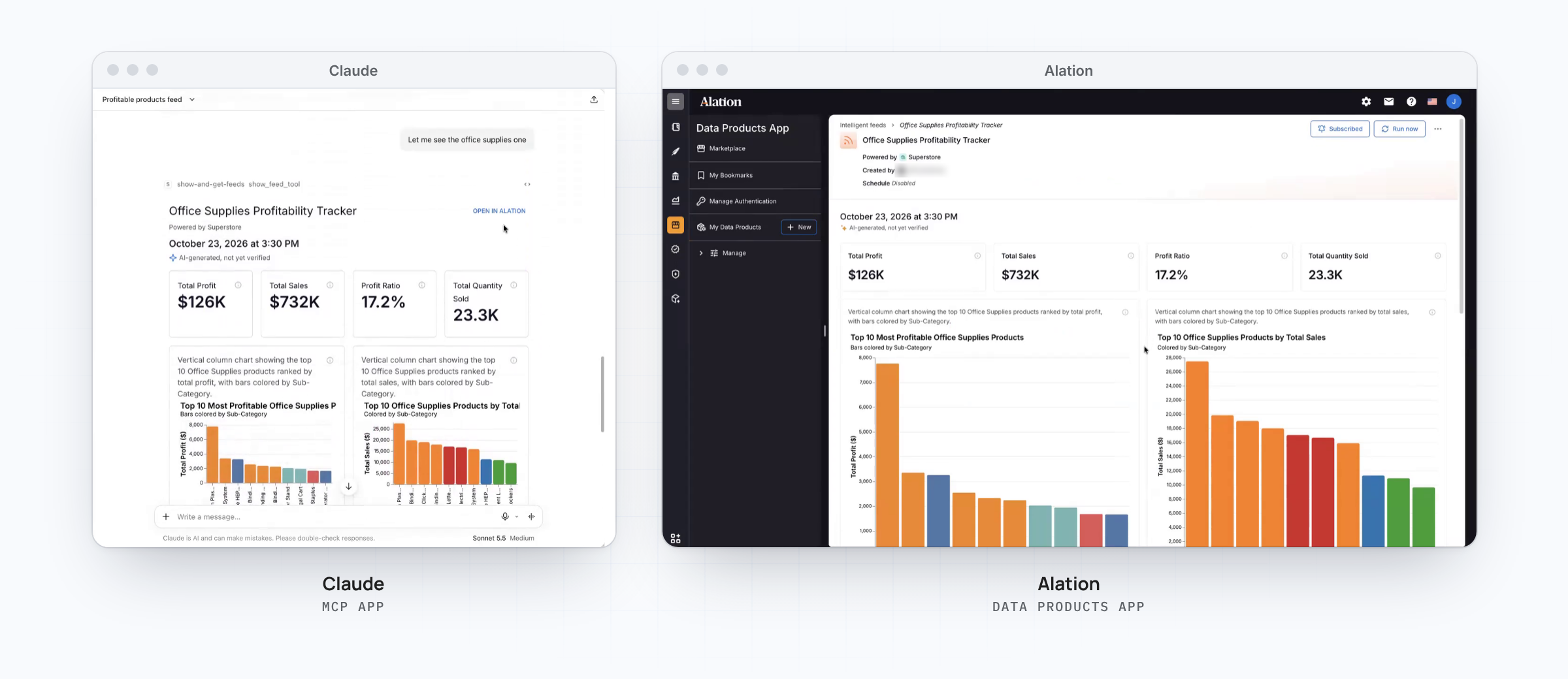
The Alation Intelligence Operating System (AIOS) builds its feeds using A2UI: metric cards, charts, and more. Each chart can show the SQL query and data behind it. Ask Claude for a feed about profitable products, and the feed renders in the conversation using A2UI to render metric cards, charts, and custom components. The same feed with the same information can be viewed directly inside Alation with a nearly identical layout.
“The Alation Intelligence Operating System (AIOS) brings artifacts with data, charts, and insights directly to where teams work with transparency about where each figure comes from. A2UI provides the interactive UI scaffolding that makes these artifacts feel like high-touch, tailored applications, whether they are used in Alation or in the AI Assistants our customers already use.”
- GT Volpe, Vice President of Product Management at Alation
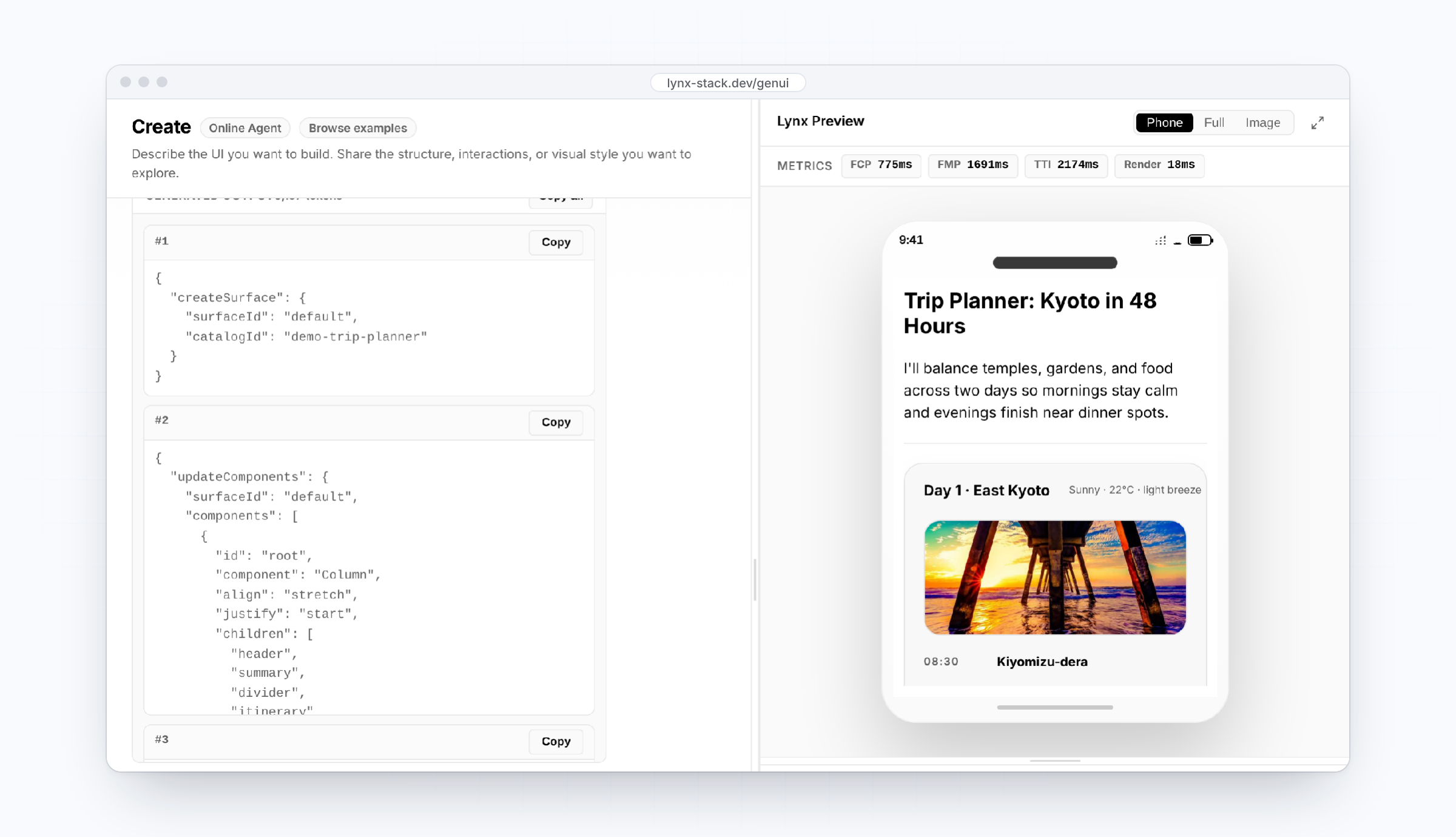
ByteDance released an A2UI renderer for Lynx, its cross-platform framework, in June 2026. Lynx keeps streamed screens smooth and ships a default set of components built on its `lynx-ui` library. In the Lynx GenUI Playground, you can watch A2UI messages rendered natively, for example, as a two-day trip planner for Kyoto. Lynx supports A2UI 0.9 today and is adapting to 1.0 with the A2UI team.
“A2UI is headed in the right direction: it separates how a model produces an interface from how an app renders it. Swappable inference formats and macros keep generation efficient, and even LLMs can be swapped for a System 1 model. In our playground, a decision model like Jev picks components and values instead of writing text, and then the SDK builds the A2UI screens that Lynx renders natively.”
- Shouqun Liu Engineering Lead for Lynx at ByteDance
Ask Gemini Notebook for a slide deck and it replies with a card that asks two things: presenter slides or a detailed deck, and which topics to focus on. A review card follows with the format, focus, and visual style, which you can edit before it generates the deck. The same cards guide Video Overviews on the web and on mobile.

Organizations can register their own agents that respond with A2UI. Gemini renders those responses using the components in its A2UI component gallery, and supports A2UI 0.9.1 today. The Google Cloud documentation covers registering an agent and hosting one on Cloud Run.
Several other Google teams, including some behind our largest products, are building features with A2UI.
Several other Google teams, including some behind our largest products, are building features with A2UI that haven’t launched yet. We’ll share more as they ship.
A2UI and MCP Apps work together. Alation already uses both to show its A2UI feeds in Claude. Our June post, A2UI + MCP Apps, covers three ways to combine them, and the A2UI in MCP Apps guide shows how to run A2UI screens inside an MCP App.
Jetpack Compose support for 1.0 is coming soon. Agents in Gemini Enterprise can already use A2UI, and we're working on upgrading Gemini Enterprise to A2UI 1.0. The A2UI roadmap covers the rest, from design-system primitives that render natively on every platform to official SDK support for decision models like Jev.
We’ve collaborated with partners who have built A2UI 1.0 demos across different industries to give you inspiration on how to adapt A2UI to your use cases. Explore what they’ve built:
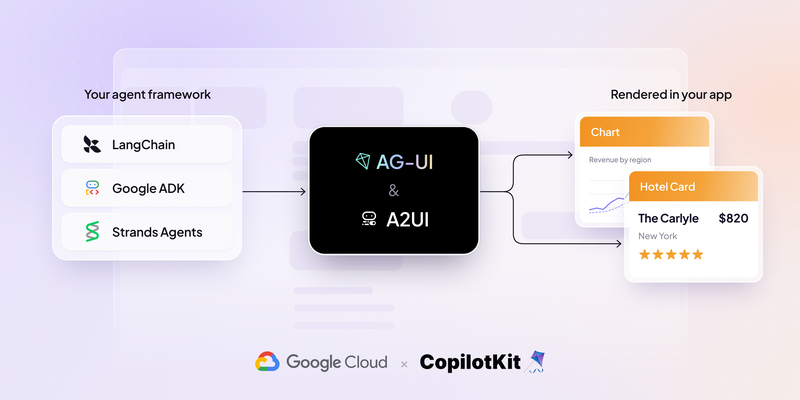
Build Generative UI Apps with A2UI & CopilotKit Agents

Announcing Long-Context Training on TPUs with MaxText Context Parallelism
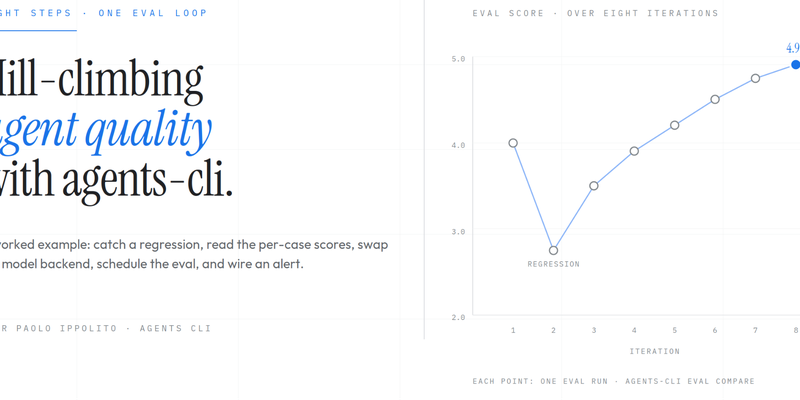
Hill-Climbing Agent Quality with Agents CLI Evaluation

On-Device Speech Recognition and Text-to-Speech in Google AI Edge Gallery