
2857 results
NOV. 16, 2026 / AI
AI agent sessions remain active and idle for most of the workday, making traditional one-Pod-per-session allocations inefficient for cluster resources. By using open-source tools like Agent Substrate and AX on GKE, developers can park idle sessions in object storage to release compute resources while maintaining session state. This approach optimizes resource utilization and reduces Kubernetes node costs by up to 40%.

NOV. 16, 2026 / AI
This guide walks developers through setting up Agent Anomaly Detection on the Gemini Enterprise Agent Platform to monitor AI agent telemetry and catch behavioral risks. It demonstrates how to deploy a sample customer support agent, trigger out-of-scope security findings, and configure proactive alerts using Cloud Monitoring and Security Command Center.

NOV. 16, 2026 / AI
How we eliminated floating-point train–inference logprob drift for on-policy LLM reinforcement learning across 64 Cloud TPU v5p chips using a generalizable four-part JAX and Pallas recipe in Tunix.

NOV. 16, 2026 / AI
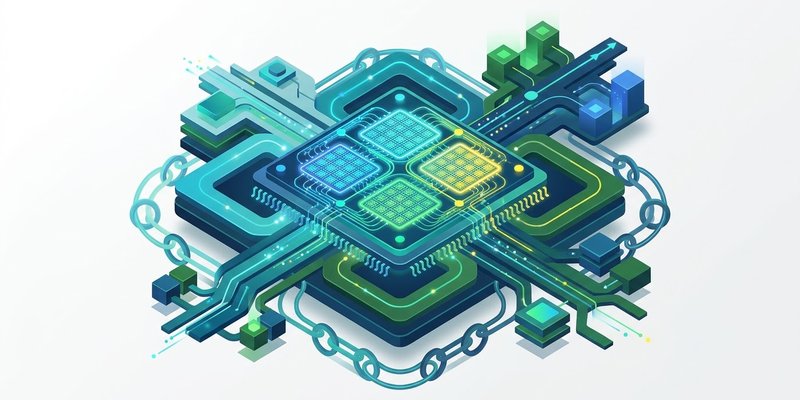
The newly launched AI-Hypercomputer/tpu-codesign guide provides hardware-grounded design rules to help developers maximize performance on TPUs for LLMs and Mixture-of-Experts (MoE) workloads. Key principles include aligning reduction and output dimensions to 256 for systolic arrays, adopting LatentMoE to compress routed token traffic, and mapping parallel axes directly onto physical links.
NOV. 12, 2026 / AI
Agent Anomaly Detection (AAD) provides asynchronous, low-latency monitoring for AI agents by analyzing OpenTelemetry traces and logs to flag goal hijacks and tool misuse. Tested across five public security benchmarks, AAD successfully caught 87% of harmful instructions carried out by agents without adding runtime latency. Developers can integrate AAD alongside semantic governance and strict tool limits as part of a defense-in-depth strategy to secure agentic applications.

NOV. 12, 2026 / AI
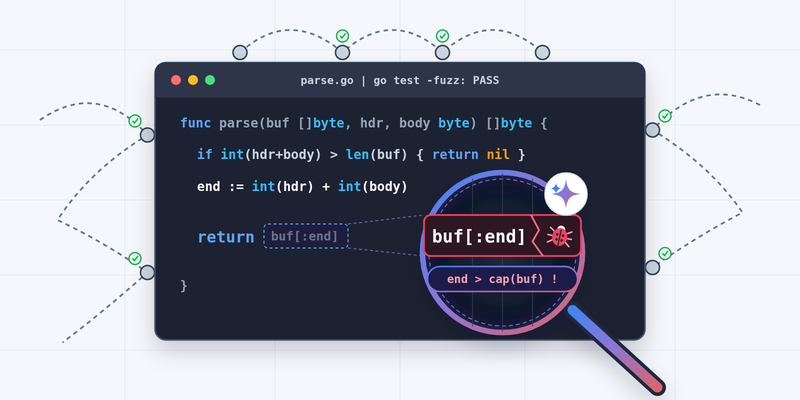
How pairing Go's surviving compiler bounds-check traps with Gemini 4 Argon and the Z3 constraint solver catches latent out-of-bounds panics in Go code and uncovers a slice-capacity blind spot in go test -fuzz.
NOV. 11, 2026 / Mobile
A2UI 1.0 is an open protocol for generative UI that enables AI agents to render interactive, native screens across web, mobile, and desktop applications. Developers can leverage open-source renderer SDKs—including React, Angular, Lit, Flutter, SwiftUI, and Jetpack Compose—alongside agent SDKs for Python, TypeScript, and Dart. The release introduces bidirectional function calls, swappable inference formats, and secure data binding to help teams seamlessly integrate generative UI into their product stacks.

NOV. 10, 2026 / Mobile
Google AI Edge Gallery now supports on-device, offline Automatic Speech Recognition (ASR) and Text-to-Speech (TTS) capabilities for building developer-friendly voice applications. Developers can leverage ML Kit for optimized Android performance, or use MediaPipe Tasks and LiteRT for cross-platform open-weight model integration. This local pipeline seamlessly pairs lightweight speech models with on-device small language models like Gemini Nano and Gemma 4 to enable real-time streaming transcription and low-latency synthesis.

NOV. 9, 2026 / AI
Google Cloud's MaxText framework now supports long-context training up to 14 million tokens on Cloud TPUs by implementing four context-parallel strategies: All-gather, A2A, P2P, and USP. Powered by the Tokamax Splash Attention kernel, these strategies effectively manage attention compute and memory bottlenecks without materializing full key-value sequences in high-bandwidth memory. Developers can adopt these capabilities in MaxText v0.2.4 to achieve high Model FLOPs Utilization (MFU) across large-scale model training workflows.

NOV. 9, 2026 / AI
Pathways is a single-controller distributed training system designed to coordinate large-scale model training across multiple accelerator groups by representing computations as a global dataflow graph. Unlike traditional SPMD models like DDP and FSDP that rely on synchronous collectives, Pathways uses asynchronous dispatch and a central scheduler to maximize hardware utilization and prevent deadlocks in complex workloads. By decoupling model definition from physical hardware via virtual devices, developers can efficiently scale complex training architectures and seamlessly handle dynamic workloads like reinforcement learning post-training.
