
2868 results
NOV. 24, 2026 / Gemini
Agent Retrieval in Vertex AI introduces managed ingestion and SearchDocuments to replace custom chunking and embedding pipelines. Developers can now import document and video files directly from Cloud Storage and query them with a single API call for cited page numbers and timestamped results. The feature supports hybrid retrieval, metadata filtering, reranking, and multimodal video audio search.

NOV. 23, 2026 / AI
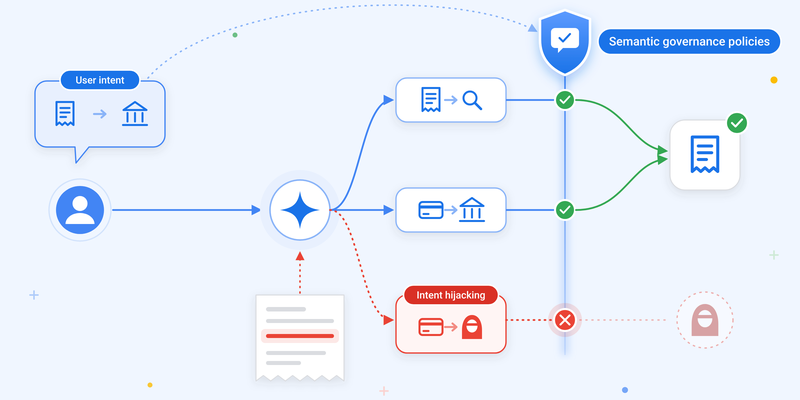
Semantic governance policies protect AI agents from indirect prompt injection and intent hijacking by validating every proposed tool call against user intent and natural language constraints before execution. As demonstrated on the AgentDojo benchmark using a Gemini 2.5 Flash agent, this mechanism reduced attack success rates from 48.7% to 0.9% while maintaining high task utility. Developers can leverage these policies in preview within the Gemini platform via Agent Gateway to secure tool-use workflows.
NOV. 20, 2026 / AI
Agent Anomaly Detection now monitors ADK agents running across AWS, Azure, or on-premises by analyzing their traces and logs in your Google Cloud project. By ingesting OpenTelemetry-formatted data through the Telemetry API, it evaluates full conversations for behavioral drift without needing access to the agent's underlying runtime. This enables security teams to detect risks like rogue behaviors, tool misuse, and resource exhaustion across multi-cloud environments.

NOV. 20, 2026 / Cloud
When building a custom enterprise UI on top of Gemini Enterprise's :streamAssist API, developers must manually implement three core authentication layers. These include authenticating users or workloads via Google Identity or Workforce/Workload Identity Federation, managing third-party 3-legged OAuth (3LO) for Federated Connectors through the Keystore, and configuring on-demand per-tool OAuth for custom ADK agents using Vertex AI Agent Engine and GCP Auth Manager.

NOV. 20, 2026 / Cloud
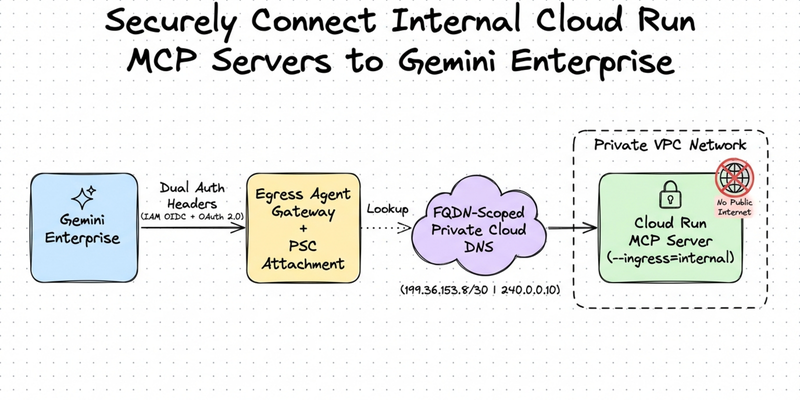
How to connect Gemini Enterprise privately to internal StreamableHTTP MCP servers on Cloud Run using Egress Agent Gateway, Private Service Connect, FQDN-scoped Private Cloud DNS, and dual-header OAuth 2.0 authentication.
NOV. 20, 2026 / Gemini
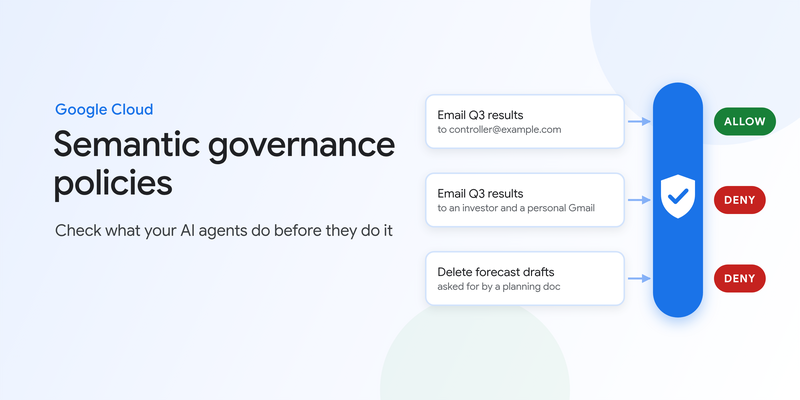
Semantic governance policies enable developers to govern AI agents by evaluating every proposed tool call inline before execution. Operating via Agent Gateway, the policy engine checks each action against user intent and plain-language rules to prevent unauthorized data sharing and prompt injection attacks. Developers can easily attach natural-language constraints to their agents and monitor auditable verdicts through Cloud Logging.
NOV. 19, 2026 / AI
This post walks developers through training a multi-turn, tool-using LLM agent using Tunix and Gemma 4 on Cloud TPUs. By leveraging agentic Group Relative Policy Optimization (GRPO) and asynchronous vLLM rollouts, the approach significantly improves complex reasoning and tool compliance in interactive environments.

NOV. 19, 2026 / AI
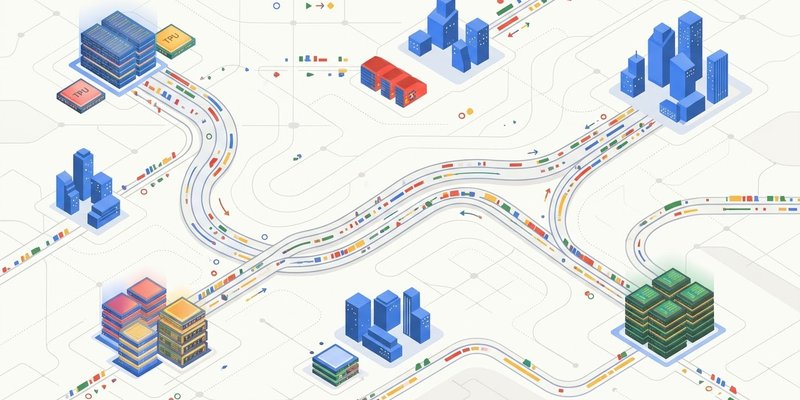
Streaming DiLoCo in MaxText enables developers to efficiently train large language models across geographically distributed TPU slices by streaming parameter fragments instead of synchronizing full models at every step. This approach slashes cross-slice communication volume by over 60× and eliminates network stalls, allowing seamless multi-datacenter scaling without degrading model convergence or quality.
NOV. 17, 2026 / Mobile
Meet Another Build File Service (ABFS), Google's open-source content-addressable filesystem and build cache that cuts Android checkouts to <8s and builds to ~2m.
NOV. 17, 2026 / Web
Google AI Studio now lets developers build, test, and ship full-stack Kotlin Android apps from a single prompt—complete with Cloud Firestore, Firebase Authentication, Firebase AI Logic, a faster HD emulator with audio, visual screenshot debugging, and direct publishing to your personal Google Play library.
