
28 results
SEPT. 9, 2026 / Mobile
Google has officially released version 1.0 of the Agent Development Kit (ADK) for Kotlin, achieving full feature parity with the Python and Java ADK cores to enable idiomatic, multi-agent AI development. Built on Kotlin Multiplatform (KMP), the framework leverages Kotlin Symbol Processing (KSP) for zero-reflection, type-safe function calling, alongside advanced orchestration capabilities like human-in-the-loop workflows and context compaction. Additionally, the release introduces a robust suite of Android-first extensions, allowing mobile developers to integrate local models via LiteRT-LM, cloud reasoning through Firebase AI, session persistence using Room, and semantic memory powered by AppSearch.

AUG. 11, 2026 / Web
Deploying secure, real-time Edge AI on Raspberry Pi is now simplified using LiteRT and lightweight Gemma open models. LiteRT optimizes CPU and GPU performance, delivering fast token speeds for models like Gemma4, enabling real-time local reasoning for robotics. Developers can quickly convert, quantize, and run these models using the lightweight LiteRT CLI tool. Support for Hailo AI accelerators is also coming very soon.
JULY 9, 2026 / Web
We're excited to introduce LiteRT.js, the newest member of the LiteRT family! LiteRT.js is our powerful solution for running machine learning models directly in the browser, extending Google's cross-platform edge AI runtime to the web. Built for JavaScript developers, LiteRT.js delivers state-of-the-art ML model inference performance on WebGPU and upcoming WebNN, with a fallback to WebAssembly for CPU. This post provides a quick tour of LiteRT.js and gives web developers everything they need to get started.

JUNE 3, 2026 / Mobile
Google DeepMind’s Gemma 4 12B model brings agentic, multimodal AI capabilities to everyday laptops with 16GB of RAM, enabling local data processing and visual insight generation. Users can leverage this model on macOS through the Google AI Edge Gallery for dynamic Python code execution and visualization, as well as via Google AI Edge Eloquent for completely offline voice dictation and text editing. Additionally, developer workflows are enhanced by the LiteRT-LM CLI's new serve command, which creates an industry-compatible local endpoint to power fully-local AI tools and agents.

JUNE 3, 2026 / AI
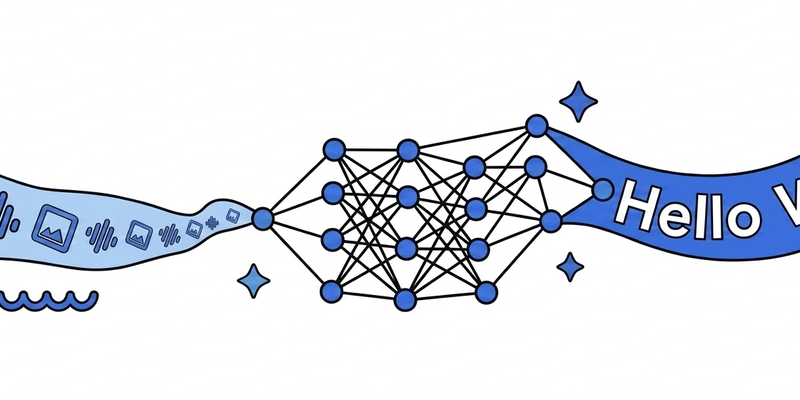
The newly released Gemma 4 12B is a dense, multimodal model designed for high-performance local AI execution on consumer devices. By introducing a novel, encoder-free architecture, it bypasses traditional visual and audio encoders to feed multimodal data directly into the LLM backbone.
MAY 19, 2026 / Mobile
The Google Tensor ML SDK is graduating to its Beta phase, allowing developers to build and deploy high-performance machine learning models directly onto the TPU of Google Pixel 10 devices. By integrating with LiteRT, Google's edge deployment framework, the SDK provides a unified workflow for developers to convert, compile, and run PyTorch or TFLite models with robust fallback options. Additionally, a new model garden offers over 100 classic and generative AI models, including Gemma 3, enabling low-latency, private features like speech recognition, computer vision, and text generation.

MAY 19, 2026 / Mobile
Google AI Edge’s LiteRT-LM provides a production-proven, highly optimized infrastructure for running Gemma 4 across cross-platform mobile and edge environments. It actively unlocks the model's native multimodal and agentic features on-device by utilizing memory-efficient dynamic loading, Multi-Token Prediction for up to a 2.2x speedup, and advanced orchestration tools like Thinking Mode and Constrained Decoding. Furthermore, the engine is rapidly expanding its integration surfaces beyond Android, introducing new native Swift APIs for Apple ecosystems and WebGPU-accelerated JavaScript APIs for high-performance, serverless browser inference.

MAY 19, 2026 / Mobile
The Google AI Edge Gallery app has expanded its on-device AI capabilities by introducing experimental support for the open-source Model Context Protocol (MCP) on Android, allowing Gemma 4 to coordinate complex tasks across external data sources like Google Workspace and Google Maps. To enable more proactive and persistent user interactions, the update adds a "Schedule Notification" skill for automating routines and a persistent chat history feature that restores long session contexts nearly instantly. Driven by an open-source toolkit, the platform encourages community developers to build and share custom utility-focused workflows, prompt configurations, and tool integrations via its GitHub repository.

MAY 14, 2026 / Mobile
Integration of Arm Scalable Matrix Extension 2 (SME2) and the Google AI Edge software stack enables high-performance, on-device generative AI by turning the CPU into a powerful matrix-compute accelerator. Using Stability AI’s "stable-audio-open-small" model as a case study, it outlines a streamlined "Convert, Optimize, and Deploy" pipeline that utilizes LiteRT, XNNPACK, and KleidiAI to automate hardware acceleration. The resulting implementation achieves over a 2x speedup in audio generation and a 4x reduction in memory usage while maintaining high audio quality on Arm-powered mobile devices and laptops.

APRIL 23, 2026 / Mobile
LiteRT is a production-ready framework designed to help mobile developers unlock the power of Neural Processing Units (NPUs), overcoming the performance and battery limitations of traditional CPU or GPU processing. By providing a unified API that abstracts away hardware complexities, it allows industry leaders like Google Meet and Epic Games to deploy sophisticated AI models for real-time video, animation, and speech recognition with significantly higher efficiency. The platform further supports developers through benchmarking tools and cross-platform compatibility, enabling seamless AI deployment across mobile devices, AI PCs, and industrial IoT hardware.
