56 results
JUNE 30, 2026 / AI
Building AI agents often leaves developers uncertain if prompt tweaks to fix single errors will accidentally cause widespread regressions in production. To bridge this gap, Google has introduced a new developer skill for coding agents that automates a five-stage evaluation flywheel: preparing data, running inference, grading with adaptive AutoRaters, analyzing failure clusters, and executing targeted optimizations. Running continuously against production traffic or on-demand via synthetic scenarios, this tool allows developers to describe testing goals in plain language while an independent evaluation service safely validates and counts actual performance improvements.

JUNE 18, 2026 / AI
Celebrating the first anniversary of the Agent-to-Agent (A2A) protocol, this blog post highlights how the framework enables autonomous AI agents to securely collaborate and hand off tasks without the rigidity of traditional APIs. By delegating complex workflows to specialized peer agents, A2A prevents context pollution, ensures data privacy, and simplifies application design through modularity. To demonstrate this ecosystem in action, the post spotlights FoldRun—an agentic interface for life sciences that orchestrates complex protein structure predictions—alongside diverse A2A use cases spanning commerce, data streaming, DevOps, and telecommunications.

JUNE 3, 2026 / AI
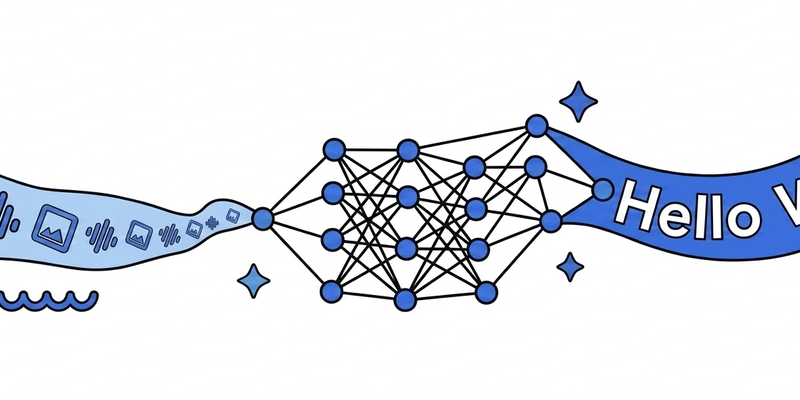
The newly released Gemma 4 12B is a dense, multimodal model designed for high-performance local AI execution on consumer devices. By introducing a novel, encoder-free architecture, it bypasses traditional visual and audio encoders to feed multimodal data directly into the LLM backbone.
MAY 19, 2026 / AI
Google is unifying its AI terminal tools by transitioning the community-focused Gemini CLI into Antigravity CLI, a new agent-first platform built for complex, multi-agent workflows. This new Go-based tool offers faster execution, asynchronous processing, and a unified architecture that syncs with the Antigravity 2.0 desktop application. While enterprise customers will maintain existing access, individual and free users must transition to the new platform before Gemini CLI stops serving requests on June 18, 2026.

MAY 19, 2026 / Cloud
Google announced the transition from assistive AI to independent agents, highlighting the launch of the Gemini 3.5 series and major updates to its Antigravity agent-first development platform. For mobile developers, the post introduces new Android CLI tools, the Android Bench evaluation leaderboard, and an automated Migration agent designed to rapidly convert various frameworks into native Kotlin code. Web development is also being transformed through Chrome DevTools for agents, the HTML-in-Canvas API, and the proposal of WebMCP, an open web standard that enables browser-based AI agents to execute complex tasks.
MAY 12, 2026 / AI
How to transition from stateless chatbots to production-grade agents capable of managing long-running enterprise workflows, such as HR onboarding, that span days or weeks. It introduces the Agent Development Kit (ADK) and its architectural shifts, specifically using durable state machines and persistent session storage to ensure an agent never loses context during "idle time" or server restarts. By leveraging event-driven webhooks and multi-agent delegation, the tutorial demonstrates how to build resilient systems that "sleep" during pauses and wake up to resume complex tasks with high reasoning accuracy.

APRIL 22, 2026 / AI
Google Cloud has introduced the Agents CLI, a specialized tool designed to bridge the gap between local development and production-grade AI agent deployment. The CLI provides coding assistants with machine-readable access to the full Google Cloud stack, reducing context overload and token waste during the scaffolding process. By streamlining evaluation, infrastructure provisioning, and deployment into a single programmatic backbone, the tool enables developers to move from initial concept to a live service in hours rather than weeks.

APRIL 15, 2026 / AI
Gemini CLI has introduced subagents, specialized expert agents that handle complex or high-volume tasks in isolated context windows to keep the primary session fast and focused. These agents can be customized via Markdown files, run in parallel to boost productivity, and are easily invoked using the @agent syntax for targeted delegation. This architecture prevents "context rot" by consolidating intricate multi-step executions into concise summaries for the main orchestrator.

APRIL 1, 2026 / AI
The Agent Development Kit (ADK) SkillToolset introduces a "progressive disclosure" architecture that allows AI agents to load domain expertise on demand, reducing token usage by up to 90% compared to traditional monolithic prompts. Through four distinct patterns—ranging from simple inline checklists to "skill factories" where agents write their own code—the system enables agents to dynamically expand their capabilities at runtime using the universal agentskills.io specification. This modular approach ensures that complex instructions and external resources are only accessed when relevant, creating a scalable and self-extending framework for modern AI development.

MARCH 25, 2026 / AI
To bridge the gap between static model knowledge and rapidly evolving software practices, Google DeepMind developed a "Gemini API developer skill" that provides agents with live documentation and SDK guidance. Evaluation results show a massive performance boost, with the gemini-3.1-pro-preview model jumping from a 28.2% to a 96.6% success rate when equipped with the skill. This lightweight approach demonstrates how giving models strong reasoning capabilities and access to a "source of truth" can effectively eliminate outdated coding patterns.