13 results
NOV. 16, 2026 / AI
This guide walks developers through setting up Agent Anomaly Detection on the Gemini Enterprise Agent Platform to monitor AI agent telemetry and catch behavioral risks. It demonstrates how to deploy a sample customer support agent, trigger out-of-scope security findings, and configure proactive alerts using Cloud Monitoring and Security Command Center.

NOV. 16, 2026 / AI
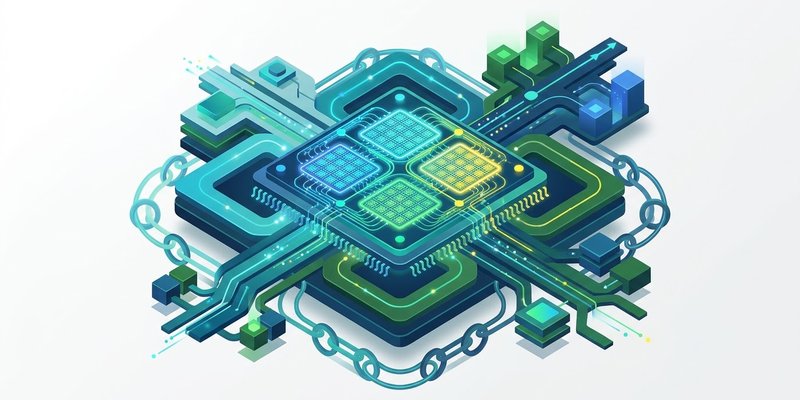
The newly launched AI-Hypercomputer/tpu-codesign guide provides hardware-grounded design rules to help developers maximize performance on TPUs for LLMs and Mixture-of-Experts (MoE) workloads. Key principles include aligning reduction and output dimensions to 256 for systolic arrays, adopting LatentMoE to compress routed token traffic, and mapping parallel axes directly onto physical links.
NOV. 12, 2026 / AI
Agent Anomaly Detection (AAD) provides asynchronous, low-latency monitoring for AI agents by analyzing OpenTelemetry traces and logs to flag goal hijacks and tool misuse. Tested across five public security benchmarks, AAD successfully caught 87% of harmful instructions carried out by agents without adding runtime latency. Developers can integrate AAD alongside semantic governance and strict tool limits as part of a defense-in-depth strategy to secure agentic applications.

NOV. 9, 2026 / AI
Pathways is a single-controller distributed training system designed to coordinate large-scale model training across multiple accelerator groups by representing computations as a global dataflow graph. Unlike traditional SPMD models like DDP and FSDP that rely on synchronous collectives, Pathways uses asynchronous dispatch and a central scheduler to maximize hardware utilization and prevent deadlocks in complex workloads. By decoupling model definition from physical hardware via virtual devices, developers can efficiently scale complex training architectures and seamlessly handle dynamic workloads like reinforcement learning post-training.

NOV. 9, 2026 / AI
Google Cloud's MaxText framework now supports long-context training up to 14 million tokens on Cloud TPUs by implementing four context-parallel strategies: All-gather, A2A, P2P, and USP. Powered by the Tokamax Splash Attention kernel, these strategies effectively manage attention compute and memory bottlenecks without materializing full key-value sequences in high-bandwidth memory. Developers can adopt these capabilities in MaxText v0.2.4 to achieve high Model FLOPs Utilization (MFU) across large-scale model training workflows.

OCT. 29, 2026 / Mobile
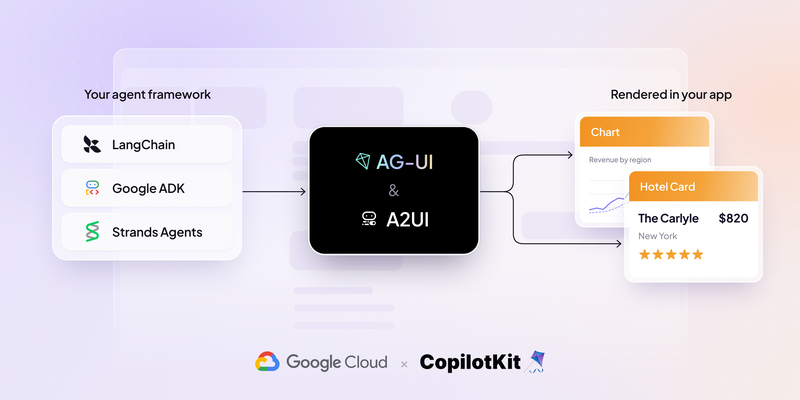
See Google A2Ui in action! Learn how to natively render agentic UIs across Langchain, AWS Strands, Microsoft agents, and Google ADK using CopilotKit SDKs for A2UI.
OCT. 28, 2026 / AI
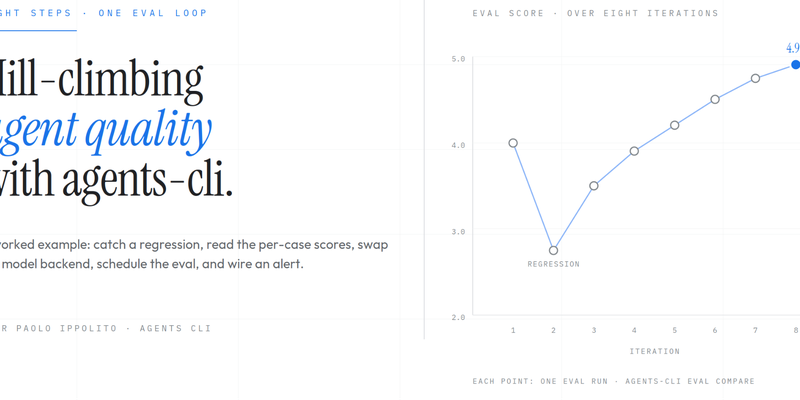
This post walks through the Agents CLI evaluation loop for systematically improving agent performance through continuous testing and grading. It demonstrates how to catch prompt regressions, evaluate model backend swaps using side-by-side trace comparisons, and automate evaluation passes. Developers will also learn how to integrate nightly scheduled runs with threshold-based alerting to track quality over time.
OCT. 28, 2026 / Mobile
LiteRT in Google Play services now offers GPU inference powered by ML Drift, delivering about 1.4x faster performance alongside the new CompiledModel API. Switching from bundled binaries reduces app size by approximately 8 MB while enabling seamless, automatic runtime updates across billions of devices. Developers can easily adopt these updates by updating their dependencies and utilizing the new Android Studio LiteRT skill for automated migration.
OCT. 27, 2026 / Mobile
This document provides a publication template and metadata structure for a technical blog post focused on building Conversational User Interfaces (CUIs) using AI. It outlines key developer focus areas, product stacks, and approval workflows required for publishing technical content through Google Developer Studio. The framework helps engineers organize their guides and solutions to effectively share AI-driven conversational interface designs with the developer community.

OCT. 22, 2026 / Cloud
API Gateway now supports real-time streaming—including Server-Sent Events, WebSockets, gRPC, and chunked transfer encoding—in Public Preview without requiring changes to your existing API specifications. This update allows developers to route long-lived, bi-directional streams and AI workloads directly through the gateway while maintaining consistent authentication, rate limiting, and observability. Additionally, gateways now feature deterministic default hostnames, simplifying environment provisioning and infrastructure-as-code management.