
186 results
NOV. 20, 2026 / Cloud
When building a custom enterprise UI on top of Gemini Enterprise's :streamAssist API, developers must manually implement three core authentication layers. These include authenticating users or workloads via Google Identity or Workforce/Workload Identity Federation, managing third-party 3-legged OAuth (3LO) for Federated Connectors through the Keystore, and configuring on-demand per-tool OAuth for custom ADK agents using Vertex AI Agent Engine and GCP Auth Manager.

NOV. 20, 2026 / AI
Agent Anomaly Detection now monitors ADK agents running across AWS, Azure, or on-premises by analyzing their traces and logs in your Google Cloud project. By ingesting OpenTelemetry-formatted data through the Telemetry API, it evaluates full conversations for behavioral drift without needing access to the agent's underlying runtime. This enables security teams to detect risks like rogue behaviors, tool misuse, and resource exhaustion across multi-cloud environments.

NOV. 20, 2026 / Cloud
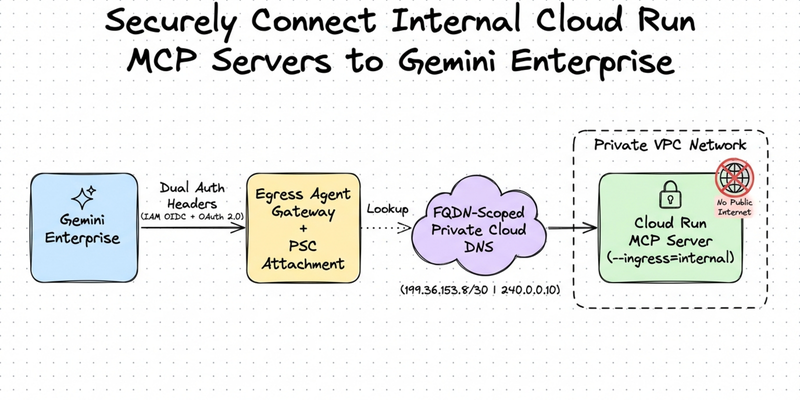
How to connect Gemini Enterprise privately to internal StreamableHTTP MCP servers on Cloud Run using Egress Agent Gateway, Private Service Connect, FQDN-scoped Private Cloud DNS, and dual-header OAuth 2.0 authentication.
NOV. 16, 2026 / AI
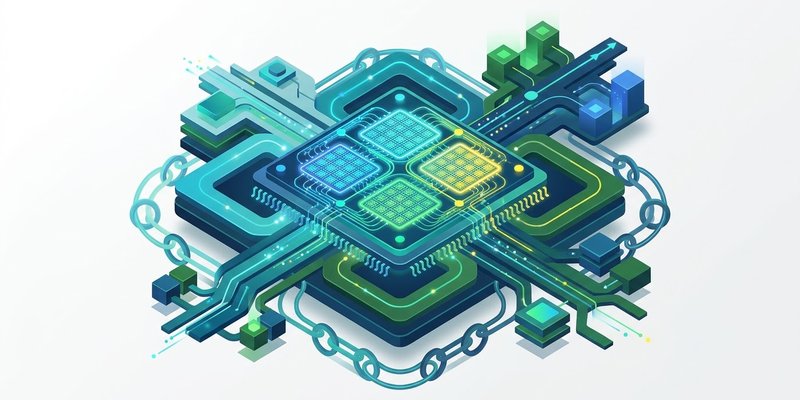
The newly launched AI-Hypercomputer/tpu-codesign guide provides hardware-grounded design rules to help developers maximize performance on TPUs for LLMs and Mixture-of-Experts (MoE) workloads. Key principles include aligning reduction and output dimensions to 256 for systolic arrays, adopting LatentMoE to compress routed token traffic, and mapping parallel axes directly onto physical links.
NOV. 12, 2026 / AI
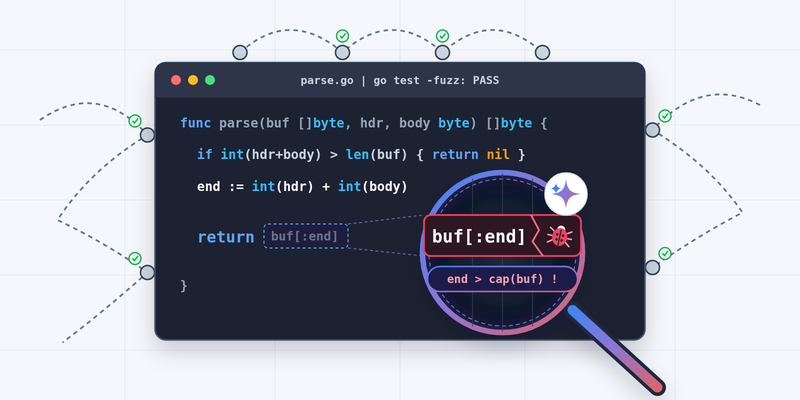
How pairing Go's surviving compiler bounds-check traps with Gemini 4 Argon and the Z3 constraint solver catches latent out-of-bounds panics in Go code and uncovers a slice-capacity blind spot in go test -fuzz.
NOV. 3, 2026 / AI
Per-token API prices keep falling, yet engineering bills for autonomous coding agents keep climbing....

OCT. 22, 2026 / Cloud
API Gateway now supports real-time streaming—including Server-Sent Events, WebSockets, gRPC, and chunked transfer encoding—in Public Preview without requiring changes to your existing API specifications. This update allows developers to route long-lived, bi-directional streams and AI workloads directly through the gateway while maintaining consistent authentication, rate limiting, and observability. Additionally, gateways now feature deterministic default hostnames, simplifying environment provisioning and infrastructure-as-code management.
OCT. 19, 2026 / AI
The open-source Agent Development Kit (ADK) and gemini-3.8-live enable developers to build responsive voice agents by implementing non-blocking tools in Python. Developers can use streaming tools to yield progress updates or background execution patterns to keep conversations fluid during long-running backend queries. Additionally, configuring response scheduling behaviors such as WHEN_IDLE, INTERRUPT, or SILENT gives developers precise control over when and how tool results are delivered into the conversation.

OCT. 19, 2026 / Mobile
Meet the LiteRT Tensor API: giving developers native C++ control over the model graph to unify end-to-end ML computations on heterogeneous edge hardware.

OCT. 14, 2026 / AI
Apigee hybrid 1.17.0 introduces native Model Context Protocol (MCP) support, enabling the MCP data plane to run directly within your own Kubernetes cluster. This architecture ensures that AI agent request traffic and tool execution remain entirely inside your infrastructure while pulling configuration updates from the control plane. Developers can expose OpenAPI 3.0.x specifications as discoverable MCP tools, leverage existing security policies and API products, and trace end-to-end requests using W3C trace context headers.
