184 results
OCT. 19, 2026 / Mobile
Meet the LiteRT Tensor API: giving developers native C++ control over the model graph to unify end-to-end ML computations on heterogeneous edge hardware.

OCT. 14, 2026 / AI
Apigee hybrid 1.17.0 introduces native Model Context Protocol (MCP) support, enabling the MCP data plane to run directly within your own Kubernetes cluster. This architecture ensures that AI agent request traffic and tool execution remain entirely inside your infrastructure while pulling configuration updates from the control plane. Developers can expose OpenAPI 3.0.x specifications as discoverable MCP tools, leverage existing security policies and API products, and trace end-to-end requests using W3C trace context headers.

SEPT. 24, 2026 / AI
Google Cloud API Gateway now acts as a native remote Model Context Protocol (MCP) server, eliminating the need to build and maintain custom middleware to expose REST APIs to AI agents. By simply adding specific annotations (like x-google-api-management.mcp) to existing OpenAPI 3.x specifications, developers can instantly convert standard REST operations into discoverable, agent-ready tools. The gateway automatically transcodes incoming MCP JSON-RPC requests into REST calls, ensuring that your existing authentication, quotas, and logging policies apply seamlessly to agent traffic without requiring new infrastructure.

SEPT. 22, 2026 / AI
Unlock premium Google Colab compute with Google AI. Subscribers now get priority accelerators, Premium GPUs, and background execution for long training runs.

AUG. 3, 2026 / AI
Real-time AI agents break traditional request-response load balancing paradigms because they rely on long-lived, stateful bidirectional streams that obscure true server capacity. To solve this, developers must implement application-level session tracking directly within the runtime to accurately measure the committed concurrent workload of active conversations. By feeding these precise session counts alongside standard CPU utilization metrics into a hybrid routing algorithm, infrastructure can effectively distribute stateful AI traffic and prevent individual backend bottlenecks.

JULY 16, 2026 / AI
To resolve the scaling bottlenecks and runtime errors caused by monolithic system prompts, engineering teams should treat prompts as build artifacts by modularizing instructions into reusable templates. By running these modular "skill files" through a transpiler, developers can enforce static validation, catch missing dependencies at build time, and integrate prompt generation directly into their CI/CD pipelines. This deterministic approach prevents code drift and ultimately establishes a safe framework where agents can propose updates to their own logic via standard pull requests.
FEB. 3, 2026 / AI
Finetuning the FunctionGemma model is made fast and easy using the lightweight JAX-based Tunix library on Google TPUs, a process demonstrated here using LoRA for supervised finetuning. This approach delivers significant accuracy improvements with high TPU efficiency, culminating in a model ready for deployment.
JULY 11, 2023
Women have made remarkable progress in advancing AI/ML technology through their contributions to ope...

JULY 10, 2023 / Announcements
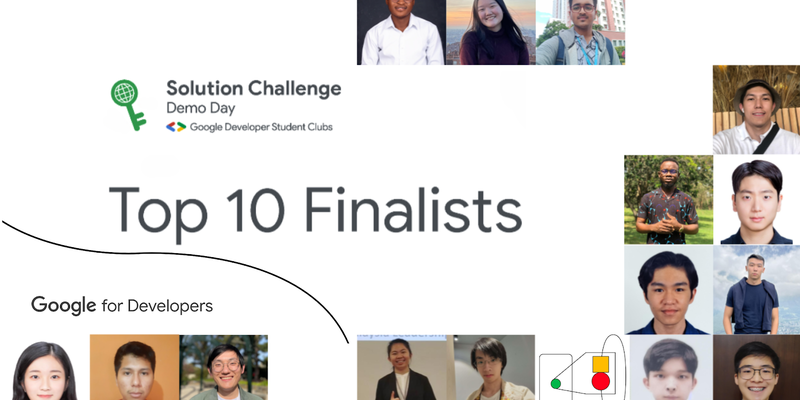
Every year, university students who are members of Google Developer Student Clubs around the world a...
JULY 6, 2023 / Cloud
Google Developer Student Club Alums Reflect On Their Journey To Google Developer ExpertsDeveloper Jo...