
43 results
SEPT. 23, 2026 / AI
The Google Antigravity SDK now empowers developers to execute offline, agentic workflows locally using models like Gemma 4 26B A4B via LiteRT. This update facilitates powerful hybrid orchestration architectures, allowing a cloud model to act as a lightweight planner while local models securely handle token-intensive tasks—like code auditing and patching—directly on-device. Furthermore, the SDK provides drop-in support for OpenAI-compatible inference servers like Ollama and vLLM, enabling the seamless creation of privacy-first, autonomous local utilities.
SEPT. 22, 2026 / AI
Unlock premium Google Colab compute with Google AI. Subscribers now get priority accelerators, Premium GPUs, and background execution for long training runs.

JUNE 16, 2026 / Mobile
Google is enhancing Sign in with Google by introducing new OIDC standard claims—specifically auth_time and amr (Authentication Methods Reference) to provide developers with deeper session metadata. These updates allow verified apps to verify the "freshness" of a user's login and the specific authentication methods used (such as MFA or hardware keys), enabling more dynamic, risk-based access controls. By leveraging these federated identity signals, platforms can better prevent account takeover and fraud while implementing granular security policies like step-up authentication for sensitive actions.

MAY 19, 2026 / Cloud
Google announced the transition from assistive AI to independent agents, highlighting the launch of the Gemini 3.5 series and major updates to its Antigravity agent-first development platform. For mobile developers, the post introduces new Android CLI tools, the Android Bench evaluation leaderboard, and an automated Migration agent designed to rapidly convert various frameworks into native Kotlin code. Web development is also being transformed through Chrome DevTools for agents, the HTML-in-Canvas API, and the proposal of WebMCP, an open web standard that enables browser-based AI agents to execute complex tasks.
MAY 19, 2026 / Mobile
The Google AI Edge Gallery app has expanded its on-device AI capabilities by introducing experimental support for the open-source Model Context Protocol (MCP) on Android, allowing Gemma 4 to coordinate complex tasks across external data sources like Google Workspace and Google Maps. To enable more proactive and persistent user interactions, the update adds a "Schedule Notification" skill for automating routines and a persistent chat history feature that restores long session contexts nearly instantly. Driven by an open-source toolkit, the platform encourages community developers to build and share custom utility-focused workflows, prompt configurations, and tool integrations via its GitHub repository.

APRIL 2, 2026 / Web
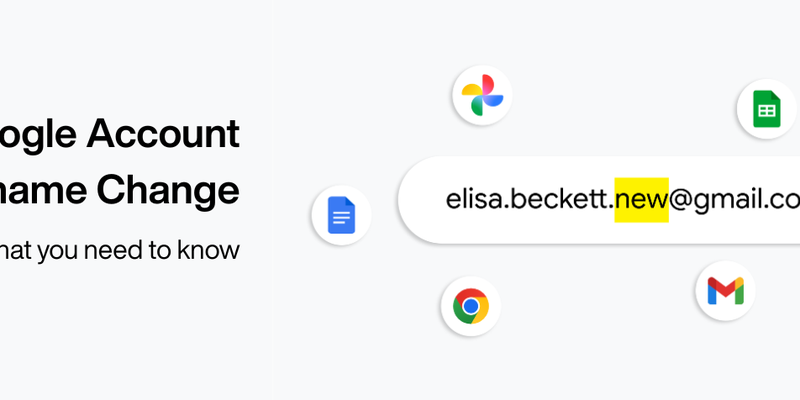
Google has updated its account settings to allow U.S. users to change their @gmail.com usernames while keeping all existing account data and inboxes intact. For developers, this means that while old email addresses will remain active as aliases, apps that rely solely on email addresses for identification may face issues with account duplication or lost access. To ensure a seamless user experience, Google recommends migrating to the "subject ID" as the primary user identifier and allowing users to manually update their contact information within app settings.
MARCH 25, 2026 / AI
To bridge the gap between static model knowledge and rapidly evolving software practices, Google DeepMind developed a "Gemini API developer skill" that provides agents with live documentation and SDK guidance. Evaluation results show a massive performance boost, with the gemini-3.1-pro-preview model jumping from a 28.2% to a 96.6% success rate when equipped with the skill. This lightweight approach demonstrates how giving models strong reasoning capabilities and access to a "source of truth" can effectively eliminate outdated coding patterns.
MARCH 17, 2026 / Cloud
When you’re prototyping locally with AI agents like Gemini CLI, Claude Code, or your own agent, thei...

FEB. 27, 2026 / AI
Agent Development Kit (ADK) now supports a robust ecosystem of third-party tools and integrations. Connect your agents to GitHub, Notion, Hugging Face, and more to build capable, real-world applications.

FEB. 11, 2026 / AI
To simplify the user experience and prevent startup failures, the Gemini CLI has introduced structured extension settings that eliminate the need for manual environment variable configuration. This update enables extensions to automatically prompt users for required details during installation and securely stores sensitive information, such as API keys, directly in the system keychain. Users can now easily manage and override these configurations globally or per project using the new Gemini extensions config command.
