187 results
DEC. 19, 2025 / AI
Gemini 3 is powering the next generation of reliable, production-ready AI agents. This post highlights 6 open-source framework collaborations (ADK, Agno, Browser Use, Eigent, Letta, mem0), demonstrating practical agentic workflows for tasks like deep search, multi-agent systems, browser and enterprise automation, and stateful agents with advanced memory. Clone the examples and start building today.
DEC. 17, 2025 / AI
Gemini 3 Flash is now available in Gemini CLI. It delivers Pro-grade coding performance with low latency and a lower cost, matching Gemini 3 Pro's SWE-bench Verified score of 76%. It significantly outperforms 2.5 Pro, improving auto-routing and agentic coding. It's ideal for high-frequency development tasks, handling complex code generation, large context windows (like processing 1,000 comment pull requests), and generating load-testing scripts quickly and reliably.
DEC. 17, 2025 / AI
Introducing the Agent Development Kit (ADK) for TypeScript, an open-source framework for building complex, multi-agent AI systems with a code-first approach. Developers can define agent logic in TypeScript, applying traditional software development best practices (version control, testing). ADK offers end-to-end type safety, modularity, and deployment-agnostic functionality, leveraging the familiar TypeScript/JavaScript ecosystem.
DEC. 15, 2025 / Mobile
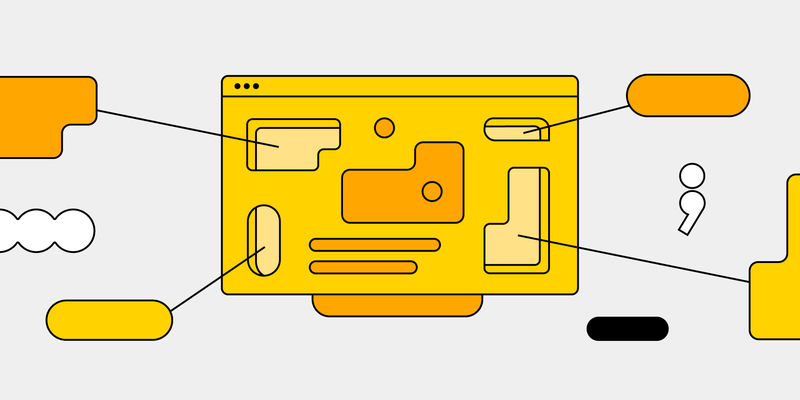
A2UI is an open-source project for agent-driven, cross-platform, and generative UI. It provides a secure, declarative data format for agents to compose bespoke interfaces from a trusted component catalog, allowing for native styling and incremental updates. Designed for the multi-agent mesh (A2A), it offers a framework-agnostic solution to safely render remote agent UIs, with integrations in AG UI, Flutter's GenUI SDK, Opal, and Gemini Enterprise.
DEC. 11, 2025 / AI
The new Gemini Interactions API enables stateful, multi-turn AI agent workflows, providing a single interface for raw models and the Gemini Deep Research Agent. It can be integrated with existing ADK systems as a superior inference engine with simplified state management, or used as a transparent remote A2A agent via InteractionsApiTransport, allowing seamless expansion of multi-agent systems with minimal refactoring.
DEC. 8, 2025 / Mobile
LiteRT and MediaTek are announcing the new LiteRT NeuroPilot Accelerator. This is a ground-up successor for the TFLite NeuroPilot delegate, bringing seamless deployment experience, state-of-the-art LLM support, and advanced performance to millions of devices worldwide.
DEC. 2, 2025 / AI
The new Data Commons extension for the Gemini CLI makes accessing public data easier. It allows users to ask complex, natural-language questions to query Data Commons' public datasets, grounding LLM responses in authoritative sources to reduce AI hallucinations. Data Commons is an organized library of public data from sources like the UN and World Bank. The extension enables instant data analysis, exploration, and integration with other data-related extensions.
NOV. 25, 2025 / AI
Gemini 3 is available via API with updates for developers: new `thinking_level` for depth control, `media_resolution` for multimodal processing, and enforced `Thought Signatures` for agentic workflows, especially with function calling and image generation. It also introduces combining Google Search/URL Grounding with Structured Outputs and new usage-based pricing for Grounding. Best practices, like using default temperature, are advised for optimal results.
NOV. 20, 2025 / AI
Introducing Google Antigravity, a new agentic development platform for orchestrating code. It combines an AI-powered Editor View with a Manager Surface to deploy agents that autonomously plan, execute, and verify complex tasks across your editor, terminal, and browser. Agents communicate progress via Artifacts (screenshots, recordings) for easy verification. Available now in public preview.
NOV. 19, 2025 / AI
Gemini 3 Pro Preview is introduced as a powerful, agentic model for complex, (semi)-autonomous workflows. New agentic features include `thinking_level` for reasoning control, Stateful Tool Use via Thought Signatures, and `media_resolution` for multimodal fidelity. It has Day 0 support for open-source frameworks like LangChain, AI SDK, LlamaIndex, Pydantic AI, and n8n. Best practices include simplifying prompts and keeping temperature at 1.0.