
83 results
SEPT. 24, 2026 / AI
Google Cloud API Gateway now acts as a native remote Model Context Protocol (MCP) server, eliminating the need to build and maintain custom middleware to expose REST APIs to AI agents. By simply adding specific annotations (like x-google-api-management.mcp) to existing OpenAPI 3.x specifications, developers can instantly convert standard REST operations into discoverable, agent-ready tools. The gateway automatically transcodes incoming MCP JSON-RPC requests into REST calls, ensuring that your existing authentication, quotas, and logging policies apply seamlessly to agent traffic without requiring new infrastructure.

SEPT. 16, 2026 / AI
Agent Anomaly Detection is a new, out-of-band oversight layer for the Gemini Enterprise Agent Platform that analyzes OpenTelemetry traces and tool calls to catch behavioral risks without adding runtime latency to live requests. It utilizes a multi-tiered detection pipeline—combining lightweight statistical scanning with deep LLM-based reasoning—to identify logical anomalies and policy violations grounded in the OWASP Agentic Top 10. Developers can triage these automated findings within Security Command Center or leverage the exposed API to programmatically block subsequent tool calls when an agent breaches defined risk thresholds.

SEPT. 9, 2026 / Mobile
Google has officially released version 1.0 of the Agent Development Kit (ADK) for Kotlin, achieving full feature parity with the Python and Java ADK cores to enable idiomatic, multi-agent AI development. Built on Kotlin Multiplatform (KMP), the framework leverages Kotlin Symbol Processing (KSP) for zero-reflection, type-safe function calling, alongside advanced orchestration capabilities like human-in-the-loop workflows and context compaction. Additionally, the release introduces a robust suite of Android-first extensions, allowing mobile developers to integrate local models via LiteRT-LM, cloud reasoning through Firebase AI, session persistence using Room, and semantic memory powered by AppSearch.

SEPT. 4, 2026 / AI
The Gemini Enterprise Developer Experience (DevEx) program conducts ongoing sprint testing of end-to-end developer workflows to identify and rapidly resolve friction points without relying on internal shortcuts. This recent sprint focused on optimizing enterprise AI governance, including refining setup prerequisites, securing extension configurations, and clarifying policy enforcement mechanics to ensure a smoother, more reliable deployment. Developers can now leverage updated documentation and standardized code samples to improve their experience with Agent Gateway and Semantic Governance configurations.

AUG. 13, 2026 / Mobile
Credentio is a newly released, open-source C++ library from Google that allows developers to integrate high-performance, local-first validation of C2PA Content Credentials into their client and server applications. By processing assets entirely locally with a highly optimized memory footprint, the library delivers instant validation verdicts for multi-gigabyte media files without incurring cloud latency, bandwidth costs, or data privacy risks. The library currently features deep manifest parsing alongside configurable trust list integration, and is available now on Google Source with future plans to support full credential generation and embedding.

AUG. 11, 2026 / Web
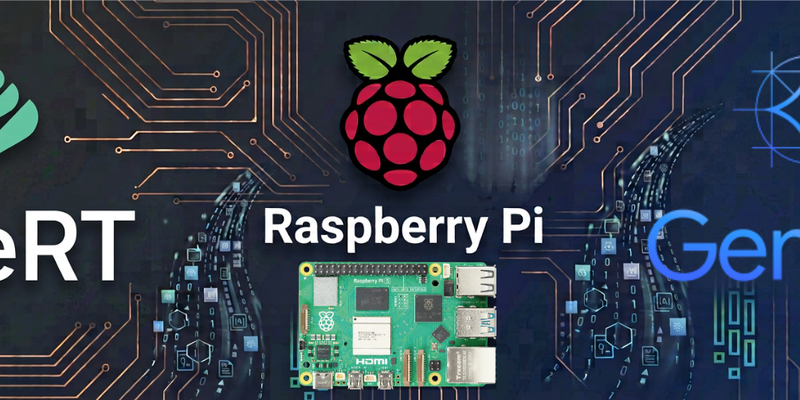
Deploying secure, real-time Edge AI on Raspberry Pi is now simplified using LiteRT and lightweight Gemma open models. LiteRT optimizes CPU and GPU performance, delivering fast token speeds for models like Gemma4, enabling real-time local reasoning for robotics. Developers can quickly convert, quantize, and run these models using the lightweight LiteRT CLI tool. Support for Hailo AI accelerators is also coming very soon.
AUG. 4, 2026 / AI
Google Cloud API Gateway now offers a model routing feature in Public Preview, allowing developers to dynamically route traffic to models like Gemini, Claude, or OpenAI OSS-GPT without hardcoding endpoints or managing open-source proxies. Developers can easily configure these routing rules directly within their OpenAPI 3.x specifications by mapping virtual model names to specific backend targets on a shared host. Once deployed, the Gateway acts as a serverless ingress layer that accepts standard OpenAI-compatible requests, automatically transcodes the payload to the native schema of the target model, and routes the traffic on the fly.
JULY 16, 2026 / AI
Conductor has evolved from a Gemini CLI extension into a portable plugin, bringing conversational Spec-Driven Development (SDD) to ecosystems like Antigravity CLI and Claude. Rather than relying on strict command sequences, developers can now chat naturally with their AI assistant while it dynamically manages persistent markdown artifacts (like spec.md and plan.md) in the background. This update eliminates workflow friction while ensuring your repository remains a version-controlled, single source of truth for your project's architecture and state across different AI tools.
JULY 8, 2026 / Mobile
On May 23, 2026, fresh off the stage at Google I/O, our Google Developer Experts (GDEs) converged on...

JULY 1, 2026 / AI
The Google Cloud Workbench Notebooks extension for VS Code has officially launched, allowing developers to connect their local IDE to scalable, cloud-based Jupyter environments. This integration streamlines the machine learning lifecycle by eliminating context switching and providing direct access to high-performance Google Cloud infrastructure. To support transparency and community-driven innovation, the newly released extension is fully open-sourced and available on GitHub and the VS Code Marketplace.
