13 results
SEPT. 23, 2026 / AI
The Google Antigravity SDK now empowers developers to execute offline, agentic workflows locally using models like Gemma 4 26B A4B via LiteRT. This update facilitates powerful hybrid orchestration architectures, allowing a cloud model to act as a lightweight planner while local models securely handle token-intensive tasks—like code auditing and patching—directly on-device. Furthermore, the SDK provides drop-in support for OpenAI-compatible inference servers like Ollama and vLLM, enabling the seamless creation of privacy-first, autonomous local utilities.
SEPT. 17, 2026 / AI
Google has partnered with Speakeasy to open-source their OpenAPI code generation suite under the AGPLv3 license, a strategic move prompted by the sudden shutdown of Google's previous proprietary SDK provider. The newly open-sourced suite equips developers with deterministic, multi-language SDK generators that natively support strict typing and SSE streaming, alongside tools for compiling agent-native CLIs and documentation MCP servers. Engineering teams can now safely integrate this robust tooling directly into their CI pipelines to automatically generate reliable client libraries for their own APIs, all while retaining complete licensing control over the output code.
SEPT. 11, 2026 / AI
The "autofinetune" project introduces an autonomous research loop that fully automates LLM post-training workflows, including Supervised Fine-Tuning (SFT) and Reinforcement Learning via GRPO. By defining boundary conditions and evaluation metrics in a single Markdown specification, developers can deploy an AI agent to iteratively edit training scripts, launch experiments, and automatically commit verified hyperparameter optimizations to Git. Built on Google’s AI stack—including Tunix, Gemma, and Cloud TPUs—this framework eliminates manual tuning cycles, successfully demonstrating hands-off performance gains in both function calling and math reasoning models.

SEPT. 9, 2026 / AI
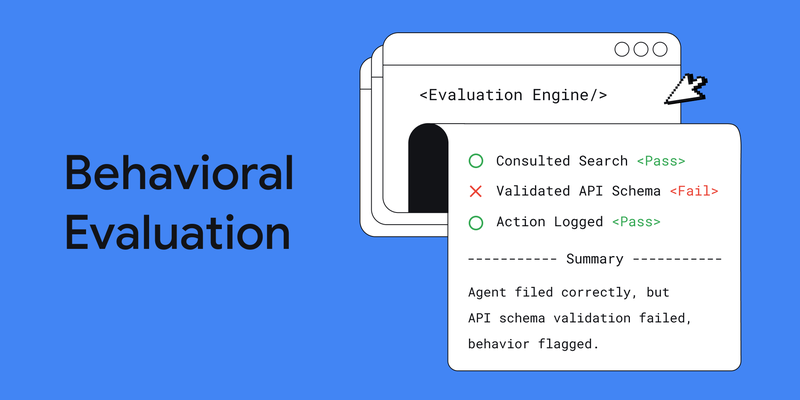
While end-to-end benchmarks like SWE-bench provide broad performance scores for AI agents, they are often expensive, slow, and lack the root-cause diagnostics needed to explain exactly where an agent's logic broke down. To solve this, developers should adopt behavioral evaluations—fast, local, unit-style tests that assert on discrete intermediate actions, such as verifying specific tool calls or file modifications rather than final string equality. By building these inexpensive micro-checks alongside macro benchmarks, engineering teams can confidently iterate on system prompts and upgrade models without the risk of regressions.
AUG. 11, 2026 / Web
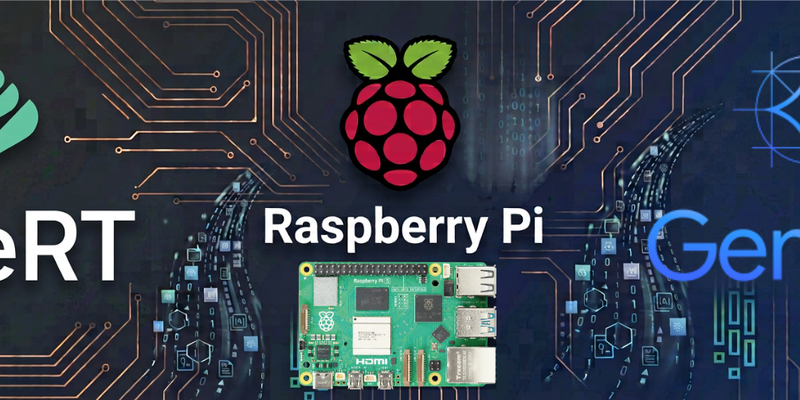
Deploying secure, real-time Edge AI on Raspberry Pi is now simplified using LiteRT and lightweight Gemma open models. LiteRT optimizes CPU and GPU performance, delivering fast token speeds for models like Gemma4, enabling real-time local reasoning for robotics. Developers can quickly convert, quantize, and run these models using the lightweight LiteRT CLI tool. Support for Hailo AI accelerators is also coming very soon.
AUG. 6, 2026 / AI
Agent Plugins 1.0.0 is a new, vendor-neutral directory specification—backed by Google, Amazon, Microsoft, and others—for packaging Agent Skills and MCP servers into a single portable unit. By standardizing the manifest (plugin.json) and utilizing a fixed directory layout, it eliminates the need for developers to maintain separate wrappers or configurations to support different AI coding agents and IDEs. Google has officially joined as a Core Maintainer and already rolled out support in the Agents CLI and Data Agent Kit, allowing developers to start building and distributing interoperable plugins today.

JULY 16, 2026 / AI
Conductor has evolved from a Gemini CLI extension into a portable plugin, bringing conversational Spec-Driven Development (SDD) to ecosystems like Antigravity CLI and Claude. Rather than relying on strict command sequences, developers can now chat naturally with their AI assistant while it dynamically manages persistent markdown artifacts (like spec.md and plan.md) in the background. This update eliminates workflow friction while ensuring your repository remains a version-controlled, single source of truth for your project's architecture and state across different AI tools.
JUNE 5, 2026 / AI
Google has announced the Google Colab Command-Line Interface (CLI), a new tool that allows developers and AI agents to connect local terminals to remote Colab runtimes for frictionless execution. The lightweight CLI enables users to easily request high-powered GPUs, run local Python scripts remotely, and seamlessly retrieve artifact logs or models like fine-tuned Gemma 3 adapters. By integrating directly into standard terminal environments, the tool is highly programmable and ready to be used by AI agents such as Antigravity or Claude Code to manage complex machine learning pipelines.

MAY 19, 2026 / AI
Google is unifying its AI terminal tools by transitioning the community-focused Gemini CLI into Antigravity CLI, a new agent-first platform built for complex, multi-agent workflows. This new Go-based tool offers faster execution, asynchronous processing, and a unified architecture that syncs with the Antigravity 2.0 desktop application. While enterprise customers will maintain existing access, individual and free users must transition to the new platform before Gemini CLI stops serving requests on June 18, 2026.

MAY 19, 2026 / Cloud
Google announced the transition from assistive AI to independent agents, highlighting the launch of the Gemini 3.5 series and major updates to its Antigravity agent-first development platform. For mobile developers, the post introduces new Android CLI tools, the Android Bench evaluation leaderboard, and an automated Migration agent designed to rapidly convert various frameworks into native Kotlin code. Web development is also being transformed through Chrome DevTools for agents, the HTML-in-Canvas API, and the proposal of WebMCP, an open web standard that enables browser-based AI agents to execute complex tasks.